
Does Shilajit Expire? Real Shelf Life by Format (2026 Guide)

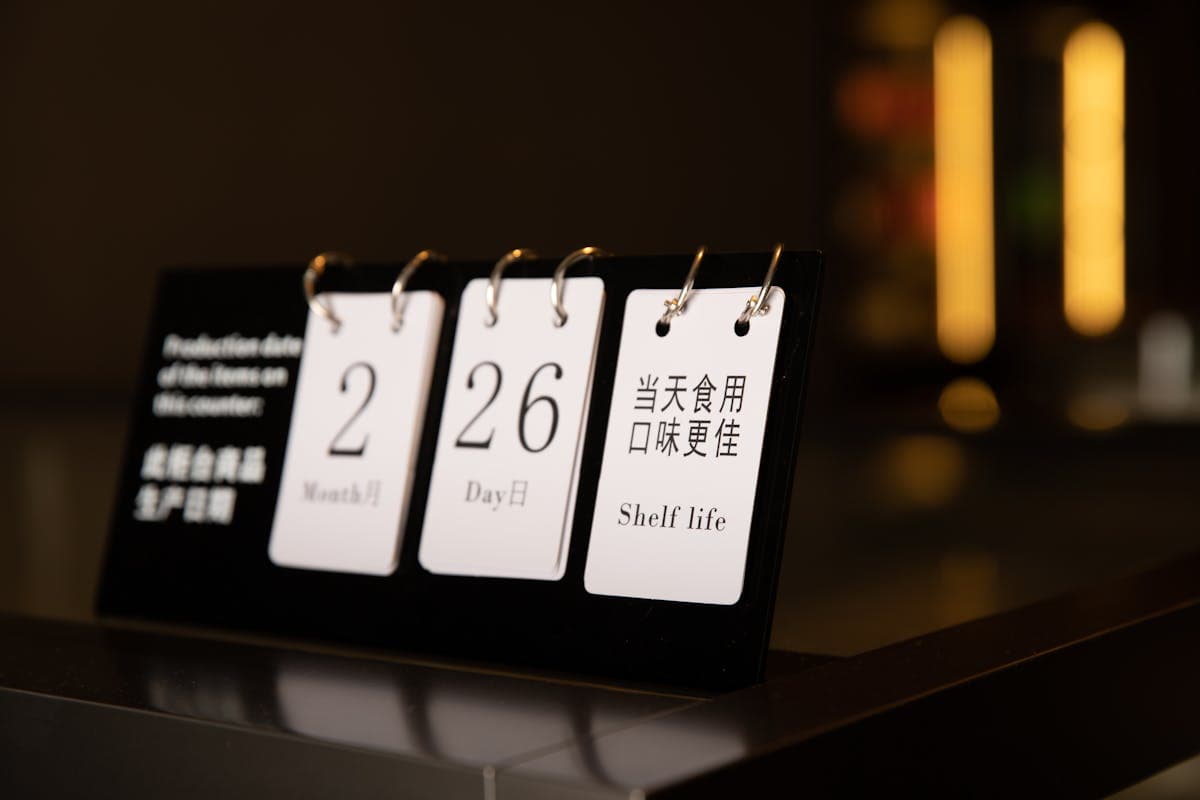
The label on your jar says "best by 2027." The Ayurvedic tradition says shilajit is a stone that has been forming for tens of millions of years and resists decay. Both can be true at once. The question is not whether shilajit "expires" in a microbial sense; it is whether the format you bought, in the conditions you store it in, will keep its potency, taste, and safety until you finish the jar.
This guide answers that for every common format, with real chemistry, real spoilage indicators, and an original storage protocol you can print and tape to your cabinet.
If you are new to the topic, start with what shilajit actually is for the geology background, then come back here.
The short answer
Pure, properly purified resin is one of the most chemically stable supplements you can buy. Its naturally low water activity, antimicrobial humic and fulvic acids, and dense mineral matrix make it inhospitable to mold and bacteria. Sealed and stored at room temperature, it can remain viable for 30 years or more.
But shilajit is also sold as capsules, powders, gummies, and liquid drops. Each of those formats adds carriers, water, sweeteners, gelatin, glycerin, or vegetable oils that bring their own shelf lives. The shilajit inside the gummy may be stable for decades; the gummy itself is not.
So the practical answer is: respect the date on the label, but understand that the date is set by the format, not by the shilajit.
Why pure resin lasts so long
Three physical and chemical properties drive shilajit's stability.
Low water activity. Authentic resin is roughly 8 to 12 percent moisture after traditional sun and water purification. That is below the threshold most molds (around 0.7 water activity) and bacteria (around 0.85) need to grow. Carbonates and Evaporites (2012) characterized Himalayan shilajit samples and consistently found this dehydrated, viscous matrix.
Antimicrobial organics. Humic acid and fulvic acid, the two organic backbones identified in Ghosal's Journal of Ethnopharmacology work on fulvic acid chemistry, have documented antimicrobial properties. The same molecules that chelate minerals in your gut also discourage microbial colonization on the resin surface.
Mineral density. Shilajit is roughly 60 to 80 percent mineral content, primarily ionic and complexed forms. Minerals do not "go off." Their bioavailability can shift slightly with oxidation over decades, but the elements themselves are permanent.
This is why traditional Ayurvedic texts treat aged shilajit as more valuable rather than less. A jar passed down for a generation is not seen as expired; it is seen as seasoned.
For a deeper dive on what genuine resin actually is, see pure shilajit and shilajit resin.
Format-by-format shelf life
Here is the practical breakdown, based on typical commercial formulations.
| Format | Typical printed shelf life | Realistic potency window | Limiting factor |
|---|---|---|---|
| Pure resin (sealed jar) | 2 to 3 years | 10 to 30+ years | Oxidation only after opening |
| Pure resin (opened, room temp) | 1 to 2 years | 3 to 5 years | Air exposure, humidity |
| Capsules (gelatin) | 2 years | 2 to 3 years | Capsule shell hardening |
| Capsules (vegetable HPMC) | 2 years | 2 to 3 years | Carrier oxidation |
| Powder (loose) | 2 years | 1 to 2 years | Moisture absorption |
| Gummies | 12 to 18 months | 1 to 2 years | Pectin/gelatin breakdown, sugar crystallization |
| Liquid drops (glycerin base) | 18 to 24 months | 1 to 2 years | Glycerin oxidation, separation |
| Honeysticks | 12 months | 12 to 18 months | Honey crystallization, packet seal |
Notice that the shilajit content is rarely the bottleneck. The carrier ages first.
What "expired" actually looks like
Real spoilage on resin is rare but recognizable.
Off smell. Fresh resin smells earthy, faintly tarry, slightly bitter. Sour, fermented, fishy, or solvent-like notes are not normal. A vinegar-sharp smell can indicate microbial activity if the resin was contaminated during purification or stored wet.
Visible mold. Fuzzy growth, white or green colonies, or a powdery bloom on the surface. This is uncommon on pure resin but can happen on adulterated product (cheap binders raise water activity and feed mold).
Color shift to gray or chalky. Resin should be glossy black to deep brown. A dull, dusty, chalky look suggests heavy oxidation or contamination with talc, ash, or other fillers. Compare with the at-home quality tests checklist.
Texture change. Fresh resin is plastic and pliable at room temperature, glassy and brittle when cold. If a previously soft resin becomes permanently rock-hard at room temperature and will not soften when warmed, it has dried out from too much air exposure. Still safe, just harder to dose.
Capsules: the shell yellows, becomes brittle, and the powder inside can cake or develop an off odor.
Gummies: sugar bloom on the surface, sticky pooling at the bottom of the jar, color darkening unevenly.
Liquid: separation that does not re-mix when shaken, cloudy sediment that was not there at purchase, sour smell.
If you see any of these in a product, throw it out. The cost of one jar is not worth ingesting unknown breakdown products.
The chemistry of slow degradation
Even when shilajit does not visibly spoil, it can slowly lose potency. Three mechanisms drive this.
Oxidation of fulvic and humic acids. These molecules contain phenolic and carboxyl groups that react with atmospheric oxygen. Over months to years of repeated air exposure, the fulvic acid fraction can drop measurably. This is why a freshly opened jar tastes sharper than the same jar two years later.
Mineral oxidation. Iron in particular shifts oxidation states with air exposure. This is mostly cosmetic (slight color change) but can subtly alter bioavailability.
Moisture migration. If your kitchen is humid, resin slowly absorbs water from the air. Above roughly 15 percent moisture, the antimicrobial barrier weakens.
None of these are dangerous on the timescale of a normal jar. They simply mean the product you finish in month 18 is not chemically identical to the one you opened in month 1.
Original storage protocol
Use this as your default. It is what I follow with my own resin.
| Step | Action | Why |
|---|---|---|
| 1 | Buy from a single-origin, third-party tested brand | Adulterants are the main spoilage vector |
| 2 | Store in original glass jar, lid screwed tight after every use | Air exposure drives oxidation |
| 3 | Keep at 60-75°F, away from direct sun and stove heat | Heat accelerates oxidation; sun degrades organics |
| 4 | Avoid the fridge unless your kitchen exceeds 80°F regularly | Cold makes resin glassy and hard to dose; condensation on lid adds moisture |
| 5 | Use a dry, clean tool every time (no wet spoon, no fingers) | Water and skin oils introduce contamination |
| 6 | If resin softens too much in summer, move to a cooler interior closet | Stable temperature beats cold temperature |
| 7 | Note opening date on the lid with a marker | Gives you a real timeline, not a guess |
| 8 | Aim to finish within 2 years of opening | Conservative window for full potency |
For more storage detail by climate and season, see how to store shilajit.
Resin format recommendations
Resin is the only format where the "30+ years" claim has any real meaning. If long shelf life is your priority, pick a high-quality jar.
- Pure Himalayan Organic Resin is a good baseline.
- Herbs Mill and PakShilajit Purified are well-sealed jars.
- BetterAlt Himalayan sources from higher altitude, which generally correlates with lower microbial load.
- NATURAL SHILAJIT DBP-Verified is one of the few brands publishing dibenzo-alpha-pyrone certification, which doubles as a freshness indicator.
Capsule and gummy considerations
If you prefer convenience, expect a shorter window.
Himalayan Pure Extract Capsules are convenient but the gelatin shell is the limiting factor. Once gelatin starts to harden or yellow, dissolution slows in the gut and bioavailability drops.
Gummies with Ashwagandha combine two active ingredients but ashwagandha withanolides degrade faster than shilajit fulvics. Treat the printed date as a real ceiling.
Liquid Drops are the most fragile. Glycerin bases oxidize once opened and exposure to light accelerates that. Keep in a dark cabinet, finish within 6 months of opening.
For format-by-format dosing, see how to take shilajit and the dosage guide.
"But the label says 2027 and I want to use it in 2030"
Honest answer: with pure resin, almost certainly fine. The label date is set by the most cautious assumption (gelatin dropper, paper label, jar seal integrity). The resin itself outlasts the packaging.
That said, three things change my answer.
If the seal has been broken and resealed many times, oxidation has compounded. Past two years post-opening, potency is meaningfully lower.
If you live somewhere humid or hot (kitchen regularly above 80°F, no AC), water activity rises and the antimicrobial barrier weakens. Trust the printed date.
If the brand is unverified, a longer window means more time for any contaminants to do harm. Heavy metals do not "expire" but they also do not get safer with time. See the safety guide for the full safety frame.
Travel and humidity
Two real-world failure modes I see often.
Humid bathrooms. People store shilajit on a shelf near the shower because that is where their morning routine lives. The resin softens, the lid sweats, and within months you have a sticky pool. Move it to the kitchen or bedroom.
Beach and tropical travel. A resin jar in a checked bag at 100°F-plus is fine for a trip. A jar left in a hot car for a summer is borderline. A jar stored permanently in an un-air-conditioned tropical kitchen will lose potency faster than the label suggests.
For travel, capsules win. Himalayan Organic Extract capsules tolerate temperature swings better than resin in transit.
Frequently confused: "expired" vs "fake"
Most "my shilajit went bad" reports turn out to be adulterated product, not expired product. Real fakes include shoe polish, coal tar, ash and binder mixes, and herbal extracts pressed into resin shape. These products spoil quickly, smell wrong from day one, and grow mold within months.
If your "shilajit" went rancid in 6 months sitting on a shelf, it was almost certainly not pure shilajit. See best shilajit brands for vetted options.
Safety caveats
Even fresh, pure shilajit is not for everyone. Standard caveats apply.
Heavy metals: only buy product with third-party heavy metal testing. Lead, arsenic, mercury, and cadmium do not expire and do not become safer over time.
Iron overload: shilajit is iron-rich. People with hemochromatosis or iron-loading anemias should avoid it regardless of freshness.
Pregnancy and lactation: insufficient safety data, skip it.
Drug interactions: anticoagulants, iron supplements, and thyroid medications can interact. Talk to your doctor.
For the full list, see shilajit side effects.
Bottom-of-jar sticky residue: use or toss?
The last gram of resin in a jar tends to be the oldest, most air-exposed, and sometimes the most stuck-on. If it smells right, looks right, and dissolves cleanly in warm water, use it. If it has crusted unevenly or smells off, toss it. The cost is trivial; the certainty is worth it.
A trick I use: when I open a new jar, I scoop the last bit of the old jar into it and stir gently. This keeps a continuous "mother" of seasoned resin without throwing anything away. Purely tradition, not chemistry, but it keeps the cabinet honest.
When to throw it out, in one paragraph
Throw shilajit out if you see visible mold, smell sourness or solvent, see clear separation in a liquid that will not re-emulsify, find sugar bloom and sticky pooling on gummies, or notice capsule shells that have yellowed and brittled. Otherwise, if it has been sealed, dry, and at room temperature, it is almost certainly still good even past the printed date. The date is a legal floor, not a chemical ceiling.
Final word
Pure resin is one of the most stable supplements in your cabinet. Capsules, gummies, and liquids are not. Buy the format that fits your life, store it properly, and respect the printed date when in doubt. Your jar will almost certainly outlast your motivation to take it daily, which is the more honest expiration problem most people run into.
If you are picking your first jar, best shilajit brands and pure shilajit are the next two reads.
How we research this content
This article was written by Paula Kessler and reviewed against published research and traditional sources by the Clean Shilajit editorial team. Where we reference studies, we link to them so you can read the original.
This content is for education and is not medical advice. It follows our editorial guidelines and is updated as new evidence emerges. Always speak with a qualified healthcare provider before changing your supplement routine.
Ready to Experience Pure Shilajit?
Check out our recommended products and start your wellness journey today.
View Recommended ProductsRelated Articles
Shilajit Gold Dosage: How Much to Take Per Day
A practical shilajit gold dosage guide covering how much to take per day, safe ranges, timing, and who should avoid it, with clear safety guidance.
Shilajit Gold Side Effects: Is It Safe Compared to Black Resin?
Shilajit gold side effects are usually mild, but added ingredients and quality matter. See how gold blends compare to plain black resin for safety.
Shilajit 6:1 Extract Explained: What the Ratio Really Means
Confused about shilajit 6:1 extract and how much to take? Here is what the ratio means, typical doses, and how it compares to raw resin and capsules.