
Shilajit Honey Sticks: Dose Math, Pros, Cons, and What to Buy

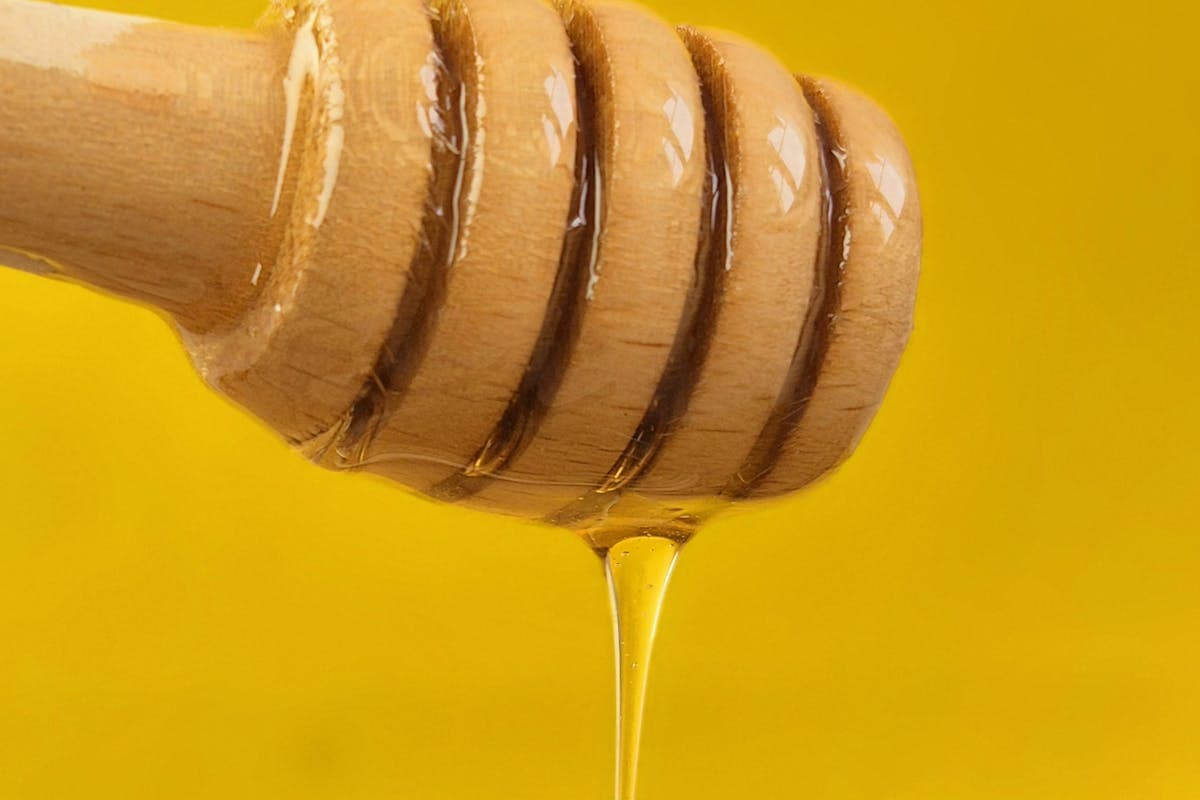
Honey sticks are the most travel-friendly format shilajit comes in, and they are also the format where dose math gets fuzziest. A typical stick contains 5 to 7 g of honey carrying somewhere between 200 mg and 500 mg of shilajit. Whether that is enough depends on the brand, the source, and what you are after.
This guide breaks down how the format works, what the real dose looks like, the trade-offs against shilajit resin, and a five-test checklist before you buy a box. If you are new to shilajit altogether, start with what shilajit actually is and circle back.
What a Shilajit Honey Stick Actually Is
A shilajit honey stick is a sealed plastic or BPA-free polymer tube containing a single serving of raw honey blended with shilajit resin or shilajit extract. You snip or twist the end, squeeze it directly into your mouth or stir it into warm water. No measuring, no sticky spoon, no resin jar that develops a fingerprint history.
The format started as a logistics fix. Resin is brilliant chemistry but inconvenient on a flight, in a gym bag, or at a desk. Capsules solve portability but lose the warm, ritual feel. Honey sticks split the difference. They keep shilajit's bioactive profile reasonably intact (honey is acidic enough to slow oxidation), they pre-portion the dose, and the honey acts as a traditional anupana, the Ayurvedic term for a carrier substance. More on that in the shilajit with honey breakdown.
How Much Shilajit Is Actually in a Stick
This is where it gets interesting. The label on a stick will usually say something like "200 mg shilajit per serving" or "1 g shilajit blend per stick." Those are different claims.
Genuine per-stick doses cluster in three brackets:
| Dose Range | Typical Use | Notes |
|---|---|---|
| 100-200 mg | Beginner, low-impact | Sub-clinical for most endpoints |
| 250-400 mg | Standard daily | Aligns with Andrologia 2015 trial dose |
| 500-750 mg | Active or stacked | Approach upper end of safe daily intake |
The Pandit et al trial in Andrologia 2015 (n=96, 250 mg twice daily for 90 days) showed a 20% testosterone bump. That is the clinical anchor most practitioners use. A single honey stick at 200 mg gets you halfway there. Two sticks daily, one morning and one evening, hits the trial protocol.
Some products stretch the math by listing a "shilajit and herbal blend" total weight. If the stick says "1,000 mg blend, includes shilajit, ashwagandha, ginseng," the actual shilajit might be 150 mg. Read the supplement facts panel, not the front label.
The BetterAlt SHE-Lajit Honeysticks currently disclose 300 mg of purified Himalayan shilajit per stick alongside raw Manuka-grade honey. That is one of the cleaner declarations on the market.
Pros vs Resin and Capsules
Honey sticks have real advantages and real trade-offs. Here is the comparison most buyers actually need.
| Factor | Honey Sticks | Resin | Capsules |
|---|---|---|---|
| Portability | Excellent | Poor | Excellent |
| Dose precision | Excellent | Variable | Excellent |
| Cost per gram | High | Low | Medium |
| Bioavailability | High (warm honey carrier) | Highest | Medium |
| Taste | Sweet, mild | Bitter, intense | Neutral |
| Shelf stability | High | Highest | High |
| Ritual feel | Medium | Highest | Lowest |
| Diabetic-friendly | No | Yes | Yes |
The honey changes the calculus. Each stick carries 4-6 g of sugars. If you are tracking blood glucose, two sticks daily is 12 g of sugar, similar to a small cookie. Not catastrophic, but worth noting. The the dosage guide guide covers how to think about totals.
Cost per gram of actual shilajit is usually 2-3 times higher in stick form than in resin. You are paying for convenience and the honey carrier. For some buyers that is worth it. For others, especially long-term users, shilajit resin ends up cheaper per dose.
Why Honey as a Carrier Works
There is real chemistry here, not just folklore. Raw honey contains glucose oxidase, which generates trace hydrogen peroxide and keeps the medium slightly acidic (pH 3.5-4.5). That acidity stabilizes the dibenzo-alpha-pyrones in shilajit and slows oxidation of the fulvic-acid fraction. Honey's high osmotic pressure also limits microbial growth without a preservative.
From a delivery standpoint, fructose and glucose in honey accelerate gastric emptying slightly, which can move the shilajit into the small intestine where most absorption happens. The Ayurvedic literature called this the anupana effect a thousand years before chromatography existed. The mechanism turns out to be roughly correct.
For more on the chemistry behind that interaction, the fulvic acid in shilajit deep dive covers the molecule responsible.
A 5-Test Buying Checklist for Honey Sticks
Use this before you click buy on any honey stick brand.
1. Honey grade and source. The label should specify the type of honey (Manuka, raw wildflower, raw clover) and country of origin. Generic "honey blend" or "honey product" usually means cheap, heat-processed, possibly cut with corn syrup. A 2018 FDA inspection found 7% of imported honey samples were adulterated. If the label is vague, walk.
2. Shilajit milligrams, not blend milligrams. The supplement facts panel must list shilajit by name, separately, in milligrams. If you only see "proprietary blend 1,000 mg," you cannot calculate your dose.
3. Source country for the shilajit. Himalayan (Gilgit-Baltistan, Ladakh, Bhutan) and Altai are the two regions with documented elevation profiles between 10,000 and 18,000 ft. "Sourced from Asia" is not enough.
4. COA for heavy metals. Even in a 5 g honey stick, if the shilajit was unpurified, you can pick up lead, arsenic, mercury, or cadmium. Demand a per-batch certificate showing all four below USP limits. The at-home quality tests guide covers what numbers to look for.
5. Sugar content per stick. A clean honey stick is mostly honey, so 4-7 g of sugar per stick is normal. If you see added cane sugar, glucose syrup, or "natural flavors," the manufacturer is cutting cost. That is also a signal they are cutting elsewhere.
A brand that meets all five tests publicly is rare. BetterAlt SHE-Lajit Honeysticks is the cleanest one we have on file. If you cannot find a stick that passes all five, go to verified resin: PakShilajit Purified, BeepWell Shilajit Resin, or NATURAL SHILAJIT 20g (DBP-Verified) all publish per-batch numbers.
Who Should Use Honey Sticks
Honey sticks make sense for specific buyers.
Travelers and commuters. Sticks survive a backpack and a TSA line. No leakage, no jar, no decanting.
People who hate the resin taste. Genuine shilajit resin tastes like burnt rubber and minerals. Honey covers it without masking the active. New users often start on sticks and graduate to resin once they get used to the flavor.
Pre-workout users. The honey provides 4-6 g of fast carbs alongside the shilajit. For active people, the Kapiva (endurance) and similar formulations lean into this stack, but you can replicate it with a clean stick and a glass of water.
Beginners testing tolerance. A pre-portioned 200-300 mg dose is forgiving while you watch for any GI or skin response. Once you confirm tolerance, scale up.
For broader format choices, the shilajit capsules and shilajit gummies write-ups cover the alternatives.
Who Should Skip Honey Sticks
Diabetics and people on glucose-restricted diets. Even at 4 g of sugar per stick, daily use adds up. shilajit capsules or liquid shilajit drops drops are cleaner.
Children under 1 year old. Honey can carry Clostridium botulinum spores. Infant guts cannot handle them. This rules out honey sticks for that age group entirely.
People sensitive to honey or bee products. Real allergies are rare but real.
Long-term cost-sensitive users. Per gram of actual shilajit, sticks run 2-3x resin pricing. A $35 box of 30 sticks at 300 mg each is $35 for 9 g of shilajit. The same money buys 30 g of Herbs Mill Himalayan Shilajit resin.
How to Use a Stick (Beyond Squeezing It Into Your Mouth)
Three usage patterns are worth knowing.
Direct. Twist the cap, squeeze the contents under your tongue, hold for 30 seconds, swallow. Gives the fastest absorption because of sublingual fulvic-acid uptake.
Warm-water dilution. Empty the stick into a glass of 100-110 F water. Stir for 10 seconds, drink. The honey dissolves cleanly, and the warm water increases shilajit solubility. Most traditional protocols specify this.
Pre-workout stack. Empty into 150 ml warm water with a pinch of pink salt 20 minutes before training. Acts as a light carb plus mineral primer. Goes well with the testosterone-support context covered in the testosterone deep-dive.
Avoid mixing sticks with hot coffee. Coffee polyphenols chelate fulvic acid. Separate the two by at least an hour.
Safety and Caveats
The standard shilajit safety profile applies. Iron overload risk for hereditary hemochromatosis. Insufficient pregnancy and breastfeeding data, so skip during those windows. Possible interaction with iron supplements (over-delivery), blood thinners (warfarin, possible additive antiplatelet effect from honey polyphenols), and chelation of certain antibiotics if dosed simultaneously. The shilajit side effects page has the full list.
The honey-specific addition is the infant rule. No honey-containing product, including sticks, for children under 1 year. Some pediatric guidance pushes that to 2 years to be safe.
Bottom-Line Recommendation
Honey sticks are a real format with real chemistry behind them, useful when portability matters and when you want a pre-portioned dose. They are not the best dollar-per-gram choice, and the sugar content disqualifies them for some users.
If you want a clean stick today, the BetterAlt SHE-Lajit Honeysticks are the cleanest declaration we track. If you would rather pay less per gram for the same active, swap to PakShilajit Purified or BeepWell Shilajit Resin and stir a rice-grain dose into your own warm honey water. The chemistry is the same.
For a wider context on what to buy and where to buy it, the best shilajit brands roundup ranks across formats.
How we research this content
This article was written by Paula Kessler and reviewed against published research and traditional sources by the Clean Shilajit editorial team. Where we reference studies, we link to them so you can read the original.
This content is for education and is not medical advice. It follows our editorial guidelines and is updated as new evidence emerges. Always speak with a qualified healthcare provider before changing your supplement routine.
Ready to Experience Pure Shilajit?
Check out our recommended products and start your wellness journey today.
View Recommended Products