
Shilajit Tablets: Binders, Dissolution & Real mg Per Tablet

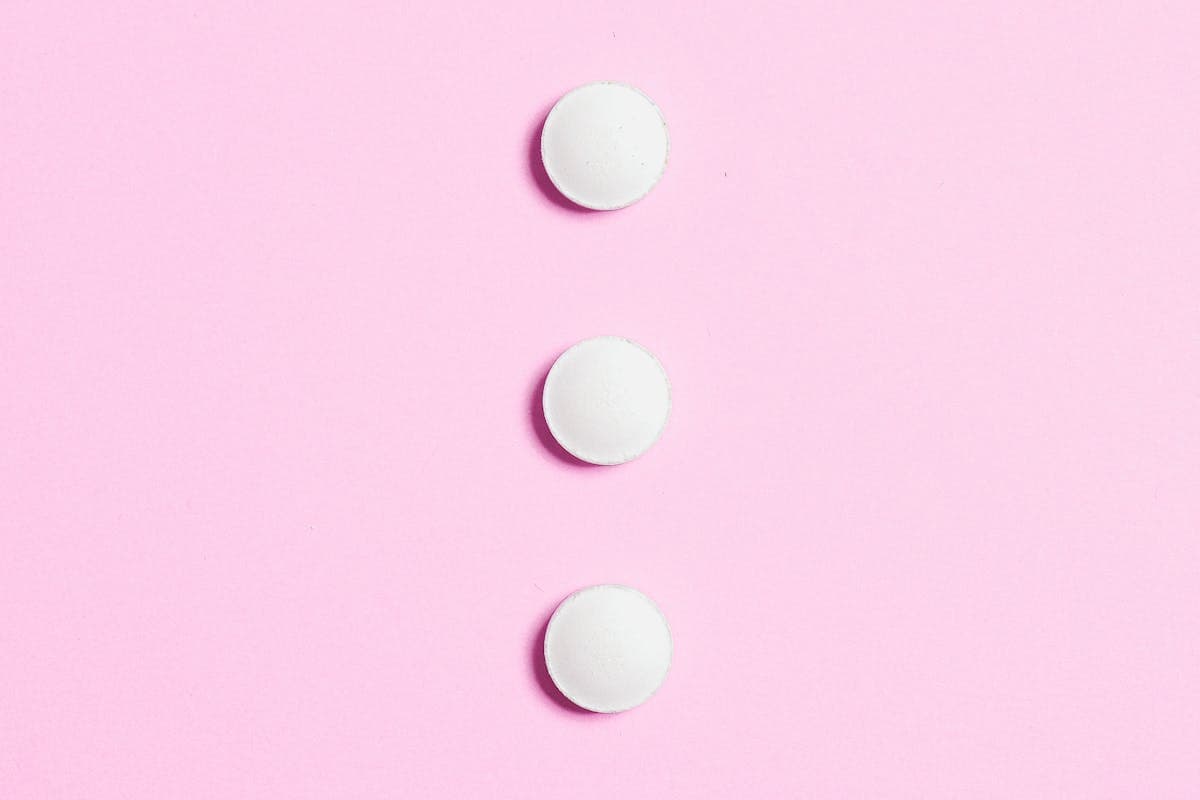
Shilajit tablets are a manufacturing format, not a clinical one. Nobody is doing 90-day Andrologia studies on tablets specifically; the research uses purified resin or standardized extract. So evaluating a tablet means evaluating the manufacturing decision: what was compressed into the tablet, what was added to make compression possible, and how the finished tablet behaves in your gut.
This guide covers the binder and excipient chemistry, the dissolution profile compared to resin, and how to translate a label into actual mg of shilajit per tablet without getting fooled by total tablet weight.
What's Actually in a Shilajit Tablet
A shilajit tablet is shilajit extract powder (or whole-resin powder) compressed under pressure, usually 5 to 30 kN, into a uniform shape. Pure shilajit powder does not compress well on its own; it sticks to the punches and cracks under pressure. So manufacturers add a small fraction of binder, lubricant, and disintegrant.
Typical excipient panel:
| Excipient | Purpose | Typical inclusion rate |
|---|---|---|
| Microcrystalline cellulose (MCC) | Binder, gives the tablet structure | 10 to 25 percent |
| Magnesium stearate | Lubricant, prevents sticking to press | 0.5 to 2 percent |
| Stearic acid | Lubricant, alternative to mag stearate | 0.5 to 2 percent |
| Croscarmellose sodium | Disintegrant, helps tablet break apart in stomach | 1 to 5 percent |
| Silicon dioxide | Flow agent | 0.2 to 1 percent |
| Hypromellose (HPMC) | Coating, controls release timing | 2 to 5 percent if coated |
A clean tablet has 70 to 85 percent shilajit content, with the rest being functional excipients. A poorly formulated tablet drops the shilajit fraction to 30 to 50 percent and pads with rice flour, dextrose, or maltodextrin.
How to Decode the Label
A bottle says "Shilajit Tablet 500 mg." That number can mean one of three different things:
- 500 mg of shilajit extract per tablet. What you want.
- 500 mg total tablet weight, of which some fraction is shilajit. Often 250 mg actual.
- 500 mg of "proprietary blend" that contains some unknown mg of shilajit. Avoid.
The label has to specify "shilajit extract 500 mg" or "purified shilajit 500 mg" with a fulvic acid percentage. If it says "tablet contains 500 mg" without qualifying which 500 mg, ask the supplier or skip it.
Math example:
- 750 mg total tablet weight
- 70 percent shilajit extract = 525 mg actives
- 50 percent fulvic acid in that extract = 262 mg fulvic acid per tablet
To hit the Pandit et al. (Andrologia 2015) clinical anchor of 500 mg shilajit twice daily, you would take this tablet two times morning and two times afternoon. That is four tablets a day, which most labels do not advertise upfront.
For broader pricing math see the price guide.
Dissolution Profile: Tablet vs Resin
The pharmacokinetic question worth caring about is how fast the active dissolves, because shilajit's bioactives only get absorbed after the matrix releases them.
| Form | Disintegration time | Time to peak fulvic acid release |
|---|---|---|
| Resin in warm water | Immediate (already dissolved before drinking) | 0 to 5 minutes (already in solution) |
| Capsule | 5 to 15 minutes (shell dissolves) | 15 to 30 minutes |
| Uncoated tablet | 10 to 20 minutes (gut break-up) | 20 to 45 minutes |
| Coated tablet | 20 to 60 minutes | 30 to 90 minutes |
| Sublingual powder/drops | Direct mucosal absorption | 0 to 5 minutes |
Practical implication: a tablet's onset is slower than a dissolved-resin dose. For a daily energy and hormonal protocol, that does not matter. For pre-workout dosing, it does. Choose tablets for steady daily use, choose resin or liquid for fast onset.
For a comparison of all forms, see the supplement buying guide.
Tablets vs Capsules
Functionally close. Differences worth knowing:
| Attribute | Tablets | Capsules |
|---|---|---|
| Format | Compressed powder | Powder in shell |
| Excipients | Binder, lubricant, disintegrant | Just shell + sometimes flow agent |
| Splitting | Possible if scored | Cannot split |
| Vegan/vegetarian | Always (depending on lubricant source) | Need to check (gelatin vs HPMC) |
| Cost | Usually slightly cheaper | Slightly higher |
| Shell allergens | None | Gelatin or vegetable cellulose |
| Stability | Generally better in heat | Slightly worse in humidity |
Both formats can be excellent or terrible depending on the manufacturer. For capsule details see shilajit capsules; brand examples include Himalayan Pure Extract Capsules and Root Labs ShilAbsorb.
When Tablets Are the Right Choice
You travel frequently and capsules melt in heat. You want zero taste exposure. You need a discreet, professional-looking supplement. You want consistent dosing without measuring. You are watching sugar (so gummies are out). You prefer the slightly lower cost per mg vs capsules. You want long shelf stability after opening.
Tablets are not the right choice if you struggle to swallow pills (gummies or powder), need fast pre-workout absorption (liquid or resin), want maximum potency per dose (resin), or need to split doses with millligram precision (powder on a scale).
For broader form selection see the decision matrix in the supplement buying guide. Resin alternatives sit at shilajit resin; flexible powder formats at shilajit powder.
Dosing Protocol
The clinical anchor is 250 mg of purified shilajit twice daily. For tablets, that means matching label-stated shilajit extract content to that target. Most reputable tablets contain 400 to 500 mg shilajit per tablet, so:
- 1 tablet morning + 1 tablet midday for 800 mg to 1000 mg total daily
- Or 1 tablet daily if it contains the full 500 mg extract dose
- Beginner: half of label dose for the first week, then ramp
Take with water, with breakfast or shortly after, and consistently. Skip evening dosing; shilajit can be energizing and disrupt sleep in some users.
Detailed protocol in the dosage guide; morning ritual in how to take shilajit.
Quality Checklist for Tablets
Before buying any tablet:
- Shilajit extract content per tablet stated as a number (not "proprietary blend")
- Fulvic acid percentage on label (50 to 75 percent acceptable)
- Excipients listed and short (MCC, magnesium stearate, silicon dioxide acceptable; long ingredient lists are fillers)
- Source region disclosed (specific region, not "Himalayas")
- Batch-specific Certificate of Analysis from ISO 17025 lab
- GMP-certified manufacturing
- Fair pricing (see the price guide; tablets typically run $0.50 to $0.90 per dose)
- Brand age (more than two years in market)
Stack-friendly options that meet most of these include Be Bodywise Shilajit and Ashwagandha, Kapiva Himalayan, Essencraft cognitive, Essencraft alt, and NutroTonic Authentic Himalayan.
For deeper sourcing standards see sourcing standards, and for COA reading lab certification and COAs.
Common Tablet Combinations
Many shilajit tablets bundle a complementary actives. Some real combinations and what they actually do:
- Shilajit + Ashwagandha (KSM-66 or Sensoril): stress-modulated testosterone support, well-studied combo. See the shilajit and ashwagandha stack.
- Shilajit + Zinc + Vitamin D: anchored on testosterone optimization, see the testosterone deep-dive.
- Shilajit + Sea Moss + Black Seed Oil: generalist mineral and immune blend.
- Shilajit + Tongkat Ali: specific male hormonal stack.
- Shilajit + Cordyceps + Rhodiola: athletic endurance stack.
Combinations are fine if you would have taken the other ingredient anyway. Combinations are bad value if you are paying for ingredients you did not want.
Side Effects and Interactions
Tablet side effects are tablet-format-specific only in two ways:
- Tablet binders can cause GI upset in sensitive individuals (croscarmellose sodium occasionally)
- Magnesium stearate at typical doses is fine but a small minority of users report sensitivity
The substance-level side effects are universal. Full breakdown in shilajit side effects, with hard contraindications:
- Pregnancy and breastfeeding
- Hemochromatosis or iron overload
- Active gout flare
- Sickle cell or thalassemia
- Concurrent iron supplementation
- Children under 18 without pediatric guidance
Drug interactions to flag with your prescriber: blood thinners, diabetes medications, antihypertensives, lithium, immunosuppressants, levothyroxine.
Storage
Tablets are reasonably stable. Keep the bottle tightly closed in a cool, dry, dark place. Avoid the bathroom (humidity) and the kitchen counter (temperature swings). The desiccant packet that ships with the bottle should stay in the bottle. Use within 18 to 24 months of manufacture date.
If tablets crumble in the bottle, swell, or develop discoloration, the seal failed and moisture got in. Replace.
Pricing Bracket
Honest tablet pricing tends to land at $0.40 to $0.80 per daily dose, which is between resin (cheapest per mg) and gummies (most expensive). Below $0.30 per dose, the tablet is either heavily cut with cheap fillers or untested. Above $1.20 per dose, you are paying for a brand premium that is not necessarily reflected in the COA.
For per-form pricing comparison see the price guide.
Tablet vs Other Forms: Quick Cheat
- Tablets vs Resin: convenience vs potency. Resin wins on dollars per mg active.
- Tablets vs Capsules: very close, slightly cheaper for tablets, slightly fewer excipients for capsules.
- Tablets vs Gummies: tablets win on cost and stability, gummies win on compliance and taste.
- Tablets vs Powder: tablets win on convenience and dose precision, powder wins on smoothie integration and dose flexibility.
- Tablets vs Liquid: tablets win on shelf life and travel, liquid wins on speed of onset.
The full matrix is in the supplement buying guide. For broader brand context see best shilajit brands and pure shilajit.
Bottom Line
Shilajit tablets are a legitimate format when the manufacturer cares about the formulation. Look for tablets with 70 to 85 percent shilajit extract by weight, a stated fulvic acid percentage, a short excipient list, a batch-specific COA, and fair per-dose pricing. Take 1 to 2 tablets daily to hit the clinical 500 mg anchor, take consistently for ninety days, and judge results against your own baseline.
The format will not deliver more than a serious resin protocol, but it will outperform a serious resin protocol you do not actually do because the prep was too inconvenient. The right form is the form you take.
Related Reading
How we research this content
This article was written by Paula Kessler and reviewed against published research and traditional sources by the Clean Shilajit editorial team. Where we reference studies, we link to them so you can read the original.
This content is for education and is not medical advice. It follows our editorial guidelines and is updated as new evidence emerges. Always speak with a qualified healthcare provider before changing your supplement routine.
Ready to Experience Pure Shilajit?
Check out our recommended products and start your wellness journey today.
View Recommended ProductsRelated Articles
Shilajit Supplement Guide: Form-vs-Form Decision Matrix
A practitioner's form-vs-form decision matrix for shilajit supplements. Resin, powder, capsules, tablets, gummies, liquid: how to pick what actually fits your routine and goals.
Shilajit Gummies: Honest Mg-Per-Gummy Math and Format Comparison
What is actually inside a shilajit gummy, how mg-per-gummy compares to resin, and whether the convenience is worth the bioavailability tradeoff.
Patanjali Shilajit Review: Shilajit Sat Specs vs Kapiva, Be Bodywise, HealthForce
Honest review of Patanjali Shilajit Sat capsules: actual product specs, classical formula breakdown, and how it stacks against Kapiva, Be Bodywise, and HealthForce.