
Shilajit Meaning: Sanskrit Etymology, Charaka and Sushruta References, and Geological Origin

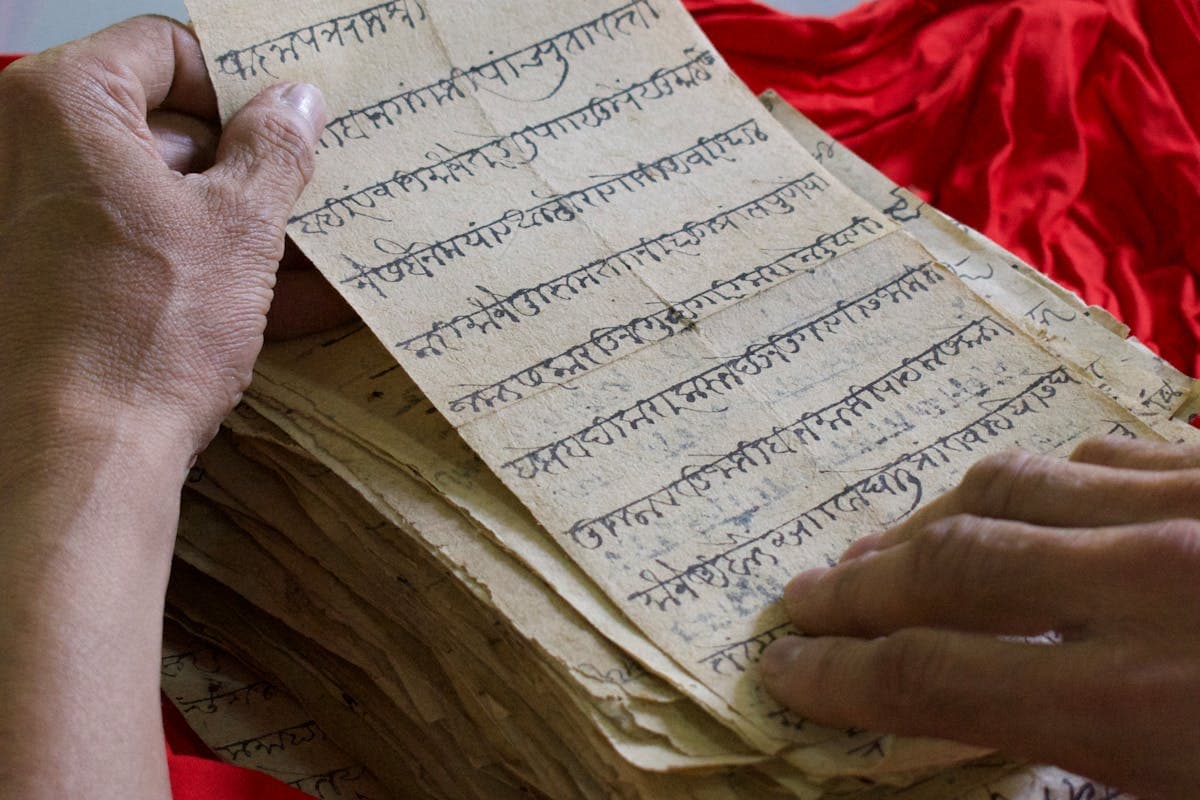
The word "shilajit" carries more chemistry than most buyers realize. It is a Sanskrit compound (शिलाजतु, shilajatu) that names both a rock-derived substance and a category of effect. The two parts of the word, the texts where it first appears, and the geology that makes the substance possible all line up. This piece walks through the etymology, the classical Ayurvedic references where the term first appears, the geological process that produces the material described, and the related names used in Tibetan, Persian, Russian, and Chinese traditional medicine.
The Sanskrit Compound
शिलाजतु (shilajatu) decomposes into:
- शिला (shilā) = rock, stone, or mountain.
- जतु (jatu) = lac, resin, gum, or juice; in some readings, also "destroyer" via the verbal root jit.
Two literal readings follow. The first, "rock-juice" or "rock-resin", describes the seasonal exudate visible on cliff faces in summer. The second, "conqueror of mountains" or "destroyer of weakness", reads jatu through the alternate root and reflects the substance's classical reputation. Most translators favor "rock-juice" or "rock-exudate" as the primary literal sense, with "conqueror" as the figurative gloss. The popular phrase "destroyer of weakness" comes from the figurative reading and traces to medieval commentaries on the classical texts.
The variant pronunciation shilajit is the modern Hindi and Indian English form. Both spellings refer to the same substance.
Where the Word First Appears
The two foundational Ayurvedic compendia describe shilajit by name and indicate its uses.
Charaka Samhita (Caraka Saṃhitā), compiled in roughly the early centuries of the Common Era, contains an extended passage in the Cikitsāsthāna section discussing shilajatu. Charaka classifies shilajatu as a rasāyana (rejuvenative), describes four varieties by source rock (gold-related, silver-related, copper-related, iron-related), and recommends prolonged courses for chronic conditions. The most cited line, paraphrased across translations, runs: "There is no curable disease that cannot be controlled by the proper use of shilajatu."
Sushruta Samhita (Suśruta Saṃhitā), surgical and medical compendium of comparable antiquity, references shilajatu under similar varieties and recommends it for diabetes (prameha), urinary disorders, and as a vitality tonic. Sushruta gives processing instructions involving water decoction and sun drying.
Astanga Hridaya of Vagbhata (c. 6th to 7th century CE), a later synthesis text, retains the same four-variety classification and adds dosing guidance.
The four-variety classification (savarna, rajata, tamra, lauha) is interesting historically; it reflects the observation that shilajit composition varies by source rock chemistry, which the Carbonates and Evaporites 2012 paper on shilajit mineralogy confirms in modern terms.
Geological Backing for the Name
The "rock-juice" reading is geologically literal. Shilajit forms through:
- Tectonic burial of plant matter during the Indian-Eurasian plate collision (roughly 50 million years ago for the Himalayas).
- Microbial decomposition over thousands of years inside rock fissures.
- Mineral leachate from the surrounding rock combining with the decomposed organic material.
- Summer warming causing low-melting fractions to ooze from cracks at altitudes above 10,000 ft.
The visible result on a Hunza or Ladakh cliff face in July is exactly what the Sanskrit name describes: a dark, viscous exudate seeping from the rock. The bioactive markers (fulvic acid, dibenzo-alpha-pyrones characterized by Shibnath Ghosal in the Journal of Ethnopharmacology series, 1988 onward) are what classical Ayurveda detected as therapeutic effect long before chemistry had the tools to name them.
For the underlying substance see what shilajit actually is, and for sourcing geography see Himalayan sourcing.
Cross-Linguistic Names
Shilajit travels under several names across regional medical traditions. Each name reveals a slightly different framing of the same substance.
| Tradition | Name | Literal sense |
|---|---|---|
| Sanskrit (Ayurveda) | shilajatu (शिलाजतु) | rock-juice, rock-resin |
| Hindi, Bengali, Marathi | shilajit | same as Sanskrit |
| Tibetan medicine | brag-zhun (བྲག་ཞུན) | rock-juice |
| Tibetan formal | brag-shun-rdzas | rock-essence substance |
| Unani / Persian | mumiya (موميا) | preservative, wax |
| Arabic | mumiya / mumiyaa (مومياء) | preservative |
| Russian (Siberian Altai) | mumiyo / mumiё | from Persian via Central Asian routes |
| Mongolian | bragshun (from Tibetan) | rock-juice |
| Chinese TCM | shi la (石蜡) | rock wax |
The shared structural pattern across the languages with closest geographic exposure to the substance (Sanskrit, Tibetan, and Mongolian) is "rock-juice" or "rock-essence". The Persian and Arabic mumiya emphasizes preservation, which connects to the substance's traditional use in wound care and is the etymological root of the English word "mummy".
For the regional sourcing tradition behind the Russian name see the Authentic Siberian Altai Golden Mountains Shilajit for a representative product carrying that lineage. For the Indian Ayurvedic naming tradition, Kapiva Himalayan Shilajit and the Be Bodywise Shilajit + Ashwagandha formulations stay close to classical formula language.
The "Conqueror of Mountains" Reading
Sanskrit roots often carry multiple senses, and translators choose based on context. The verbal root jit (जि) means to conquer, win, or overcome. Reading "shila" + "jit" gives the figurative "rock-conquering", interpreted in classical commentary as "the substance powerful enough to bestow the strength of mountains, conquering bodily weakness". This reading is metaphor; the literal etymology favors "rock-juice" via shila + jatu.
Both senses survive in modern usage. Marketing copy tends to lean on the figurative reading; classical pharmacology textbooks lean on the literal.
What the Classical Texts Recommend the Word For
Charaka and Sushruta do not use shilajatu for general wellness in the modern sense. The classical indications, listed roughly in the order they appear:
- Prameha (diabetes and chronic urinary disorders).
- Krsata (emaciation, debility).
- Vyadhikshamatva (low immunity, susceptibility to disease).
- Vajikarana (vitality, fertility, sexual function).
- Rasayana (general rejuvenation when used in long courses).
Modern human research on the substance maps reasonably well onto two of these classical indications. The Andrologia 2015 Pandit study (n=96, 250 mg twice daily, 90 days, ~20 percent total testosterone increase) and the Andrologia 2010 oligospermia trial (n=35) reflect the vajikarana category. Smaller studies on cellular energy and exercise tolerance reflect the rasayana category.
For the modern benefit synthesis with citations, see the complete benefits guide; for the testosterone-specific protocol see the testosterone deep-dive and shilajit benefits for men.
Pronunciation
The Sanskrit pronunciation is closer to "shi-la-ja-too" with a soft a in each syllable. Modern Hindi shifts to "shi-la-jit" with a short i in the final syllable. Both are acceptable in English.
The Tibetan brag-zhun is pronounced roughly "drak-zhun" with an aspirated initial; the Persian mumiya is "moo-mee-ya"; the Russian mumiyo is "moo-mee-yo".
Common Misreadings of the Name
- "Shilajit means asphalt." It does not. The Latin classification asphaltum punjabianum is a 19th-century European descriptor based on appearance, not on chemistry. Shilajit is biological in origin (decomposed plant matter); asphalt is petroleum-derived.
- "Mumijo and shilajit are different substances." They are the same substance under different regional names, with mineral-profile variation reflecting source rock.
- "Jit means tar." It does not. Jatu means resin, gum, or juice; jit (separate root) means conquer.
- "Shilajit means dirty rock." The dark color suggests this in English; the etymology says nothing of the kind.
Why the Name Matters When Buying
The name signals two things on a label.
- A brand using the spelling and the classical formula language (shilajatu, shudh shilajit, rasayana) typically frames the product within Ayurvedic tradition, often as a combination formula. Patanjali's classical formulations and similar Ayurvedic-positioned products fall in this category.
- A brand using "shilajit" with modern supplement-facts panel language and COA disclosure frames the product within the Western dietary supplement tradition, typically as a single-ingredient resin or extract. Pure Himalayan Organic Resin Shilajit, Authentic Genuine Himalayan SHILAJIT, Herbs Mill Himalayan Shilajit Essential, and PakShilajit Himalayan Shilajit Purified are pool examples.
The honesty test is the same regardless of language register: does the brand publish a batch-level COA, name the source region, and state the fulvic-acid percentage with method? See lab certification and COAs for the COA reading walkthrough and pure shilajit for the broader purity context.
A modern-format pure-resin alternative for buyers who want a clean Ayurvedic-style single-ingredient: SHILAJOY.
Symbolic Layer Worth Naming
Even a strictly literal reading of the etymology preserves a useful symbolic frame. The substance comes from rock, formed slowly over geological time, charged with the mineral signature of its source mountain. The ancient name simply records that fact. When a brand markets shilajit as "mountain energy" or "the conqueror of weakness", they are leaning on a 2,000-year-old reading that the chemistry partly justifies. The minerals are real; the dose-response in the cited research is real; the rest is poetry attached to a genuine substance.
Safety Caveats Apply Regardless of Tradition
The classical texts do not exempt shilajit from caution. Charaka recommends purification before use specifically to address the heavy-metal and contaminant concerns that modern testing addresses with COA panels. The same caveats hold:
- Pregnancy and breastfeeding: avoid (insufficient data).
- Hemochromatosis: avoid (humic substances enhance iron absorption).
- Anticoagulants, oral hypoglycemics, immunosuppressants, lithium: discuss with your prescriber.
- Children: not studied.
The full safety review lives at shilajit side effects. For sourcing-specific context, see sourcing standards and best shilajit brands.
Bottom Line
The Sanskrit name shilajatu literally means "rock-juice", with a figurative reading of "conqueror of mountains". The classical texts (Charaka, Sushruta, Vagbhata) describe the substance under that name and recommend it as a rasayana with specific indications. The geology validates the literal reading; the human research validates a subset of the classical indications; the etymology has nothing to do with marketing copy. Buy from brands that respect the chemistry; the name will take care of itself. For format-specific buying see shilajit resin, shilajit capsules, shilajit gummies, and liquid shilajit drops.
How we research this content
This article was written by Paula Kessler and reviewed against published research and traditional sources by the Clean Shilajit editorial team. Where we reference studies, we link to them so you can read the original.
This content is for education and is not medical advice. It follows our editorial guidelines and is updated as new evidence emerges. Always speak with a qualified healthcare provider before changing your supplement routine.
Ready to Experience Pure Shilajit?
Check out our recommended products and start your wellness journey today.
View Recommended ProductsRelated Articles
Shilajit Himalaya: The Region, the Brand, and the 7-Test Buying Checklist
Disambiguating Himalayan-region shilajit from Himalaya Wellness brand products, with a 7-test checklist for verifying "from Himalaya" claims.
Shilajit Extract vs Resin: 4:1, 10:1, and What Standardization Means
What shilajit extract actually is, how 4:1 and 10:1 ratios compress dosing, and a clear comparison with raw resin including bioavailability and cost.

What Does Shilajit Do? Mechanism Plus Eight Evidence-Backed Effects
What shilajit actually does in the body, mechanism by mechanism, with the eight effects that have real human evidence behind them. Doses, timelines, and what to skip.