
What Is Shilajit? Geology, Chemistry, History, and Regional Variants

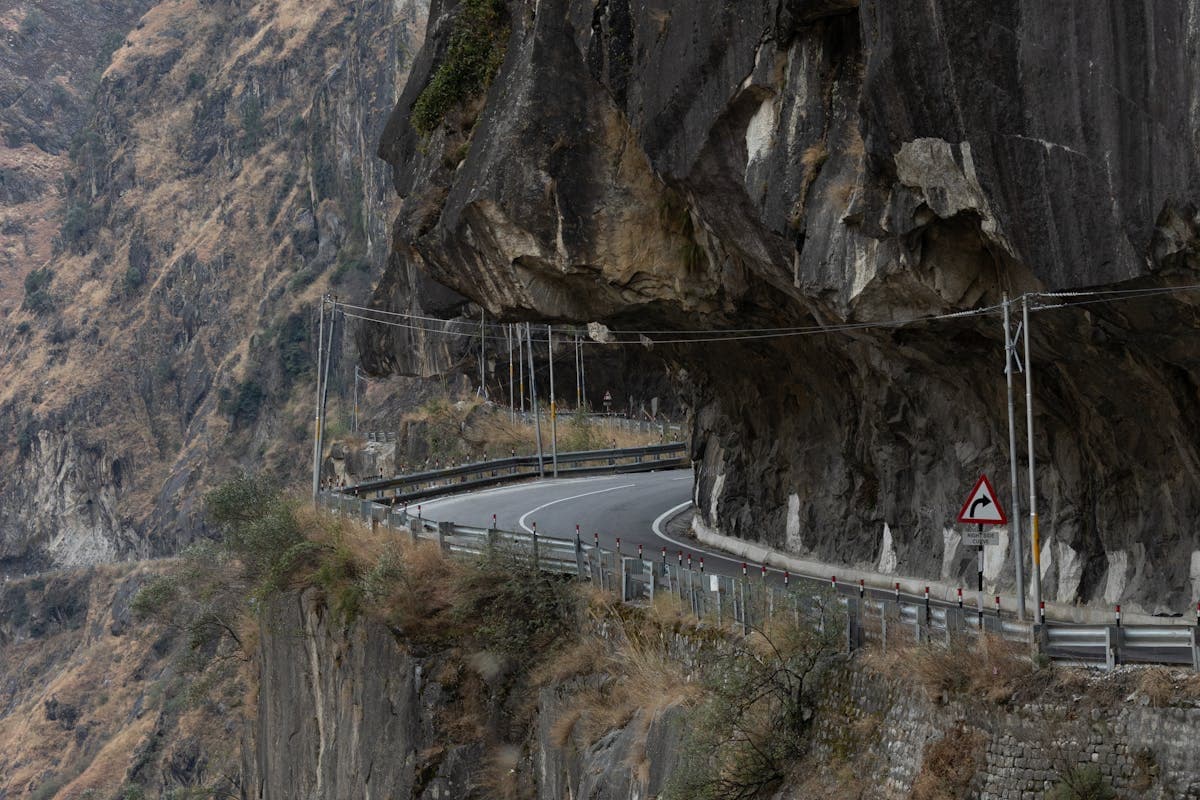
Shilajit (Sanskrit: शिलाजतु, "conqueror of rock") is a thick, blackish-brown exudate that seeps from cracks in rocks at high elevation across several mountain systems. It is not a plant, not an animal product, and not synthesized in a lab. It is a geological substance, formed over centuries from compressed plant matter that has undergone extensive transformation under specific conditions of altitude, pressure, microbial activity, and rock chemistry.
This guide covers what shilajit is from four angles: how it forms, what it contains chemically, how regional variants differ, and how it has been used historically. If you only read one shilajit article, this is the foundation that makes the rest make sense.
The Geological Definition
The clearest formal description comes from a 2012 paper in Carbonates and Evaporites (Wilson et al), which characterized shilajit as a humic-substance-rich rock exudate formed through microbial degradation of plant matter under specific conditions of altitude (typically 3,000-5,000 meters), low oxygen, low temperature, and prolonged compression.
Three things have to happen, in sequence, for genuine shilajit to form:
- Specific plant material accumulates over centuries. Latex-bearing alpine plants such as Euphorbia royleana and certain mosses and lichens are common contributors in the Himalayan literature.
- Partial, slow microbial decomposition under cold and low-oxygen conditions. This is critical because faster decomposition at lower elevations produces ordinary peat or topsoil, not shilajit.
- Compression and extrusion. Mountain weight and seasonal heat-driven softening cause the resin to migrate through rock cracks and emerge during warm months.
This is why shilajit cannot be manufactured. The required conditions are geological and time-dependent. Authentic resin is harvested by hand in summer when the heat softens it enough to extrude.
Etymology and Names
- Sanskrit: शिलाजतु (shilajatu), where "shila" means rock and "jatu" means resin or exudate
- Persian: salajeet
- Russian and Altai usage: mumijo (мумиё) or mumie
- Tibetan: brag-zhun ("rock juice")
- Mongolian: barakhshin
In English literature you will see the spellings shilajit, shilajeet, salajeet, mumijo, mumie, and moomiyo, all referring to substantially the same class of substance with regional variation.
How It Forms (Detailed)
The formation process plays out across geological timescales, often centuries. The dominant model in the literature has four stages.
Stage one: organic accumulation. Alpine flora dies, falls, and accumulates in rock crevices and overhangs. At lower elevations this material would decompose quickly. Above 3,000 meters, cold and low oxygen slow microbial activity dramatically.
Stage two: microbial transformation. Specific microorganisms (including some Actinobacteria and fungal communities) act on the partially preserved plant matter, breaking down lignin and cellulose into smaller phenolic and humic substances over decades.
Stage three: mineral leaching. Rainfall and snowmelt percolate through fissures, dissolving trace minerals from the surrounding rock. The acidified, mineral-loaded water passes through the decomposing organic mass, leaving ionic minerals bound to humic compounds.
Stage four: compression and extrusion. The accumulated organic-mineral matrix is compressed by overlying rock for centuries. Sun-warmed summer rocks soften the embedded resin, which extrudes through narrow cracks. Local harvesters scrape it from the rock face during a brief annual window.
What emerges is not yet usable. Raw shilajit must be purified (shodhana in Ayurveda) to remove rock fragments, microbial contamination, and any heavy metals that exceed safe levels.
Chemical Composition
Standardized shilajit contains four major classes of compound. Percentages vary by source.
| Component | Typical % by dry weight | Function |
|---|---|---|
| Fulvic acid | 50-80% | Mineral chaperone, antioxidant |
| Humic acid | 10-20% | Gut-microbiome interaction, antioxidant |
| Dibenzo-alpha-pyrones (DBPs) | 1-5% | Mitochondrial electron transport support |
| Trace minerals (ionic) | 3-5% | Cofactors for hundreds of enzymes |
Beyond these, shilajit contains amino acids, phenolic compounds, plant sterols, and trace fatty acids. The combination, not any single isolated compound, is responsible for its effects.
Fulvic Acid (The Headline Constituent)
Fulvic acid is a low-molecular-weight humic substance with reversible mineral-binding capacity. It crosses cell membranes more easily than larger humic acids. Ghosal's work in the Journal of Ethnopharmacology established its function as a mineral chaperone and antioxidant. When you see "60% fulvic acid" on a label, that is the operative active concentration.
Humic Acid
Larger and less cell-permeable than fulvic acid. Acts more in the gut, where it can support beneficial microbial communities and bind toxin loads. The 10-20% by weight contribution is meaningful for gut and immune effects.
Dibenzo-Alpha-Pyrones
A small but pharmacologically interesting class. DBPs are the basis for the mitochondrial-respiration claims. They support electron transport chain function and may spare CoQ10. Animal data shows improvements in mitochondrial membrane potential.
Trace Minerals
Iron, magnesium, calcium, zinc, copper, selenium, manganese, potassium, phosphorus, and roughly 75 others depending on source rock. Critically, these are in ionic form, not bound to chelates that limit absorption. The mineral profile depends on what the surrounding rocks contain at that specific deposit.
Regional Variants
Shilajit is not one product. The chemistry differs meaningfully by source.
Himalayan Shilajit
Sourced from Nepal, northern India (Uttarakhand, Himachal, Jammu and Kashmir), Pakistan, Bhutan, and Tibet at 3,000-5,000 meters. The most studied variant in modern literature. Typical fulvic acid percentages run 60-80% in standardized resin. Usually richer in iron and magnesium. Most Andrologia and Indian clinical trials use Himalayan source material.
Examples in commerce: PakShilajit purified, authentic genuine Himalayan, Pure Himalayan organic resin, Himalayan organic resin extract, and capsule formats like Himalayan Pure Extract.
Altai Shilajit (Mumijo)
Sourced from the Altai range across Russia, Mongolia, Kazakhstan, and northwestern China. Russian and Soviet-era research used Altai sources extensively. Often slightly softer at room temperature. The mineral profile differs because the underlying geology differs (more sedimentary carbonates in places). Reference: Siberian Altai golden mountains shilajit.
Caucasian Shilajit
From the Caucasus mountains between the Black and Caspian seas. Less commercially available outside the region. Composition has been studied less in peer-reviewed Western literature.
Other Sources (Treat Carefully)
Andean, Norwegian, and Afghan variants exist in small quantities. Most have not been characterized in published literature to the same depth as Himalayan or Altai material. If you see "Andean shilajit" marketed, ask for a chemical assay rather than trusting the label.
The bottom line: source matters because chemistry varies. A reputable label states the geographic origin. "Mountain shilajit" is a red flag.
A Brief History
Shilajit has appeared in medical writing for at least 3,000 years. The earliest references in the Charaka Samhita (3rd century BCE compilation, with older oral material) classify it as a rasayana, a substance used to extend lifespan and restore depleted tissues. The Sushruta Samhita and later Ayurvedic compendia (Ashtanga Hridaya, Bhavaprakasha) describe traditional purification methods (shodhana) and indications.
Persian and Arabic medical traditions referenced "salajit" or "salajeet" similarly, particularly in the works of Avicenna (Ibn Sina, Canon of Medicine, 11th century), where it appears under the name mumiya or mumijo for fractures, weakness, and reproductive complaints.
Tibetan medicine (Sowa Rigpa) uses brag-zhun for fatigue, altitude sickness, and digestive complaints. Russian and Soviet research from the mid-20th century onward characterized mumijo extensively for performance and recovery in athletes and military personnel.
The cross-cultural convergence is striking. Multiple unconnected medical traditions independently identified similar substances at high altitude across Asia and used them for overlapping indications: fatigue, fertility, altitude tolerance, fracture healing, and rejuvenation.
Ayurvedic Classification
Classical Ayurveda divides shilajit into four grades by metallic mineral predominance:
- Swarna shilajit (gold): reddish, traditionally most prized
- Rajat shilajit (silver): whitish, second-tier
- Tamra shilajit (copper): blue-black
- Lauha shilajit (iron): brownish-black, most commonly available
Most commercially available shilajit today is the iron grade. The classifications relate more to traditional categorization than modern quality standards. Modern standards focus on fulvic acid percentage, heavy-metal absence, and microbial purity, which the grades do not directly capture.
Ayurveda also frames shilajit as a rasayana across four functional categories: balya (strength), vajikarana (reproductive), medhya (cognitive), and rasayana proper (general rejuvenation). The contemporary evidence map (in the full list of uses) lines up reasonably well with this classification.
What Modern Science Has Confirmed
Areas where human evidence is reasonably solid:
- Male testosterone elevation in low-normal men (Pandit Andrologia 2015, n=96, +20% over 90 days at 250 mg twice daily)
- Sperm count and motility improvement in oligospermic men (Pandit Andrologia 2010, n=35, +60% count over 90 days)
- Altitude adaptation (DIPAS field studies)
- Reduced subjective fatigue in chronic-fatigue and post-exertional populations
Areas with promising mechanism but limited clinical data:
- Cognitive support (tau aggregation in vitro, Carrasco-Gallardo 2012)
- Bone density support (animal-heavy)
- Cardiometabolic markers (small open-label trials)
- Skin and connective tissue (mostly mechanistic)
Mechanism breakdown lives in what shilajit does.
Forms in Commerce
| Form | Description | Use case |
|---|---|---|
| Resin | Sticky, tar-like paste | Highest potency, daily users |
| Powder | Dried and ground | Smoothie users, DIY capsules |
| Capsule | Powder or extract in shell | Travel, taste-averse |
| Liquid | Resin dissolved in water/glycerin | Quick dosing |
| Gummy | Sweetened soft chew | Compliance for taste-averse |
Form-specific buying guides at shilajit resin, shilajit capsules, and shilajit gummies. Examples readers reach for include Herbs Mill resin, BeepWell resin, SHILAJOY, BetterAlt Himalayan, DBP-verified resin, Root Labs ShilAbsorb, Pure Himalayan metabolism, HealthForce Supreme, Essencraft cognitive, SHE-Lajit honeysticks, liquid drops, gummies with ashwagandha, Be Bodywise with ashwagandha, NutroTonic, Kapiva endurance, and plant-based formulation.
How to Verify Authenticity
Real shilajit resin behaves predictably:
- Solubility: dissolves completely in warm water producing a golden-brown to dark solution within 1-2 minutes. Does not leave grit or undissolved particles.
- Texture: pliable at room temperature, hardens when refrigerated, softens in warm hands.
- Smell: distinct earthy, mineral, slightly tarry odor. Bland or sweet smells suggest adulteration.
- Taste: bitter, mineral, somewhat smoky.
- Burn test: a small amount on a flame should char to ash, not melt and bubble like plastic.
Lab-side verification matters more than at-home tests. Look for stated fulvic acid percentage, heavy-metal panel (Pb, As, Hg, Cd), and microbial limits. Filters in at-home quality tests, lab certification and COAs, and sourcing standards. Quality benchmarks in pure shilajit, best shilajit brands, and pricing in the price guide.
Common Misconceptions
"It is a plant." No. It is a geological exudate. The plant matter is one of several inputs that formed it over centuries.
"It contains gold." Trace amounts of various metals appear in some sources, but in concentrations far below therapeutic significance. Marketing that emphasizes "gold-grade" status is using traditional classification language, not chemistry.
"It can be synthesized." No reproducible synthesis exists. The required conditions are geological and time-dependent.
"All shilajit is the same." Not even close. Geographic source, harvesting season, and processing method all affect composition. A standardized resin from a tested supplier and a generic capsule from a no-name brand are not the same product.
"More is better." No. The trial doses run 250 mg twice daily for fertility and testosterone work. Higher doses do not produce proportionally larger effects and increase the iron-accumulation risk.
Who Should Use It and Who Should Not
Reasonable candidates: men in their 30s-60s with low-normal testosterone or oligospermia, athletes wanting recovery support, adults with persistent unexplained fatigue, trekkers preparing for high-altitude trips, women with iron-related fatigue (with ferritin monitoring).
Should avoid: pregnant or breastfeeding women, hemochromatosis patients, anyone with active gout, patients on warfarin without supervision, anyone within two weeks of scheduled surgery. Full inventory in shilajit side effects.
For sex-specific guidance, see shilajit benefits for men and shilajit benefits for women. For dosing and prep specifics, how to take shilajit and the dosage guide. For cycling questions, shilajit cycling protocol. For the broader benefits map, the complete benefits guide. And if you start it and feel nothing, troubleshoot at why shilajit isn't working.
Bottom Line
Shilajit is a humic-substance-rich rock exudate from high-altitude mountains, formed over centuries through specific geological and microbial conditions. It contains fulvic acid, humic acid, dibenzo-alpha-pyrones, and ionic trace minerals, with the combination producing measurable effects on testosterone, fertility, fatigue, and altitude tolerance in human trials.
Source matters. Quality matters. Dose matters. Time matters. Without those four, shilajit is just an expensive disappointment. With them, it is one of the more interesting traditional supplements with credible mechanism and modern evidence behind it.
How we research this content
This article was written by Paula Kessler and reviewed against published research and traditional sources by the Clean Shilajit editorial team. Where we reference studies, we link to them so you can read the original.
This content is for education and is not medical advice. It follows our editorial guidelines and is updated as new evidence emerges. Always speak with a qualified healthcare provider before changing your supplement routine.
Ready to Experience Pure Shilajit?
Check out our recommended products and start your wellness journey today.
View Recommended ProductsRelated Articles

Shilajit Glossary A to Z: Every Term You'll See on Labels
Every term you'll meet shopping for shilajit, defined in plain language with the practical context that matters when you read labels and COAs.

Shilajit Myths Debunked: 14 Claims That Don't Survive the Lab
Fourteen of the most common shilajit myths fact-checked against published research, COA reality, and basic chemistry.
How Shilajit Is Made: Geology, Collection, and Processing Explained
From plant matter pressed into Himalayan rock over centuries to a purified resin you can dose. The full process, traditional and modern.