
Shilajit Price Guide: Real $/Gram Math & Fair-Price Floor

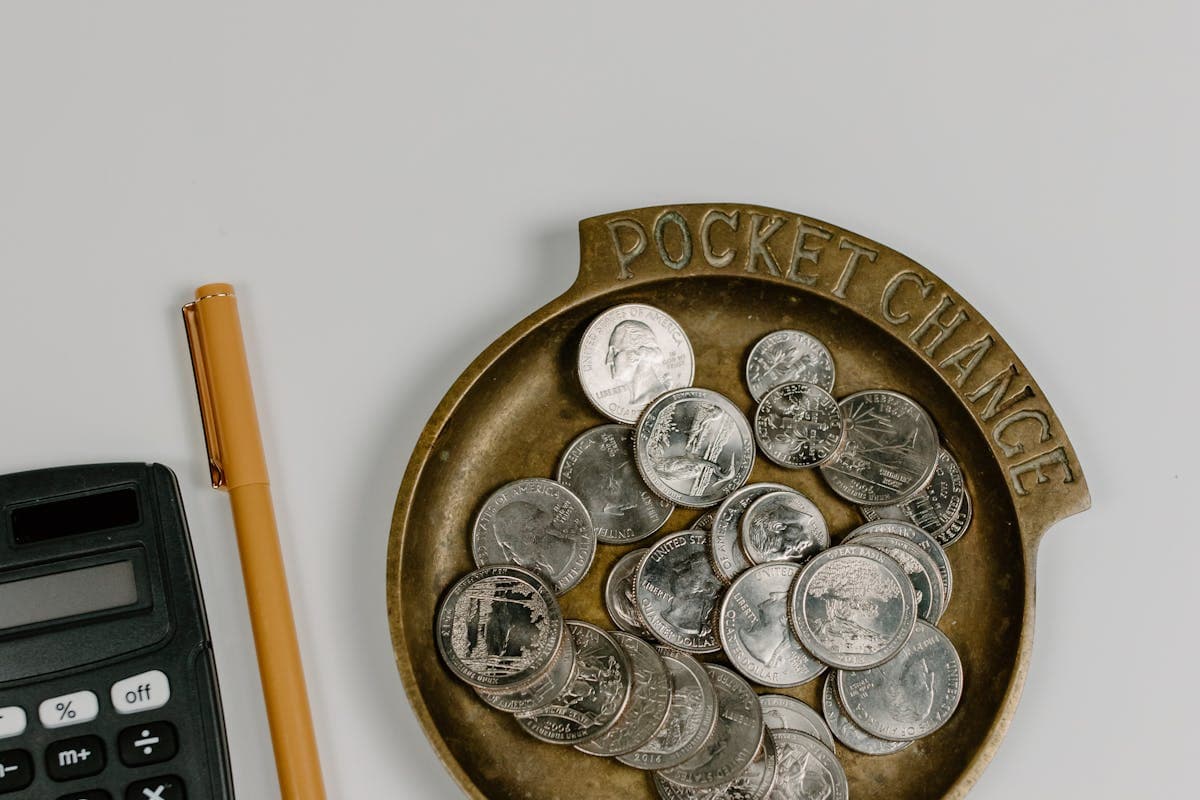
Shilajit pricing is unusually wide for a supplement. Same ingredient name, ten dollars to one hundred and fifty dollars. Most of that spread is fraud or marketing premium, not quality. This guide gives you the actual cost-per-gram math, a fair-price floor below which the product is almost certainly fake, and a per-form breakdown you can use to evaluate any listing.
The Fair-Price Floor
Authentic shilajit harvest happens at 10,000 to 18,000 feet across Gilgit-Baltistan, Hunza, Ladakh, Altai, and the Caucasus. Once you account for raw collection, multi-stage water purification, ICP-MS heavy-metal testing, microbial testing, fulvic acid quantification by USP method, packaging, customs, distribution, and Amazon's roughly 30 percent margin, the math just does not work below a certain dollar-per-gram floor.
Real-world floor: roughly $1.20 to $1.50 per gram of finished resin in retail. Anything cheaper and one of the following is true: the resin is cut with shoe polish, ash, or humic compost; the heavy-metal testing was skipped; the fulvic acid is measured by spectrophotometry on a coffee solution rather than the actual product; or it is plain not shilajit.
A "10 grams for $9.99" listing is not a deal. It is a tell.
Cost Per Gram Across Forms
| Form | Typical street price | Effective $/gram of shilajit | Notes |
|---|---|---|---|
| Resin (15 to 50g jar) | $25 to $80 | $1.20 to $2.00 | Lowest cost per actual mg of actives |
| Powder, freeze-dried (50 to 100g) | $40 to $80 | $0.80 to $1.20 | Cheaper per gram, but watch for carriers |
| Powder, spray-dried with carrier | $20 to $40 | Misleading, often 40 to 60 percent filler | Adjust for carrier |
| Capsules (60 ct, 500 mg) | $25 to $45 | $1.40 to $2.50 (per 500 mg active) | Includes capsule and bottle premium |
| Gummies (60 ct, 600 mg) | $30 to $50 | $1.80 to $3.00 | Sugar, pectin, and flavor inflate cost |
| Liquid drops (1 oz) | $25 to $40 | $2.00 to $4.00 (per shilajit equivalent) | Convenience premium |
The cheapest gram of legitimate shilajit is almost always purified resin in a 30 to 50 gram jar. The most expensive gram is almost always a flavored gummy. The interesting middle ground is freeze-dried powder, where you can actually beat resin on cost per gram if you can verify the fulvic acid percentage.
For decision context, the the supplement buying guide maps form against use case.
Why "$15 Shilajit" Is Always Suspect
Run the supply chain backwards. A $15 jar of "30g Himalayan shilajit resin" on Amazon means the seller netted maybe $9 after platform fees and shipping. Subtract bottle, label, and inbound freight from a contract manufacturer in South Asia, and the actual product cost has to be under $3. There is no version of authentic, lab-tested resin that costs $3 to land in a US warehouse.
What you are buying instead is one of these:
- Bituminous tar with iron oxide for color
- Humic-acid mud sourced from peat bogs and reconstituted
- Diluted real resin (10 percent shilajit, 90 percent food-grade gum)
- Heat-degraded byproduct from another company's purification waste
ConsumerLab and independent testers have repeatedly flagged sub-$20 listings with elevated lead and arsenic. The economics simply do not support honest supply at that price.
What Actually Drives Real Pricing
Origin altitude and remoteness. Hunza valley product hand-collected at 14,000 feet costs more than mass-collected Altai material. Both can be excellent. Both should be on the label. See sourcing standards for what to ask suppliers.
Purification method. Multi-stage filtered water extraction across 7 to 14 days costs an order of magnitude more than a single-pass alcohol wash. The slow methods preserve fulvic acid; the fast methods do not.
Testing. A real Certificate of Analysis from an ISO 17025 lab runs $300 to $800 per batch. Companies testing every batch eat that cost; companies testing once a year amortize it across a million bottles. See lab certification and COAs for what a clean COA looks like.
Fulvic acid concentration. A 75 percent fulvic acid resin contains roughly twice the actives of a 40 percent product, so the per-mg cost can actually be lower despite a higher sticker.
Format and processing. Resin is the cheapest form to manufacture (purify and pack) and the most expensive form to fake convincingly. Gummies are the most expensive form to manufacture and the easiest to dilute without anybody noticing.
Sample Real-World Pricing
These are illustrative ranges across vetted listings as of 2025. Brands shift, but the dollar-per-gram math holds.
| Product type | Listing example | Approx. unit cost |
|---|---|---|
| Premium resin, 15g | Herbs Mill Himalayan | Mid-tier |
| Budget purified resin | PakShilajit Purified | Entry |
| Resin with adaptogens | Be Bodywise Shilajit and Ashwagandha | Mid |
| Honeystick format | SHE-Lajit Honeysticks | Premium per gram |
| Resin pure | BeepWell Resin | Mid |
| Resin with COA | SHILAJOY Resin | Mid |
| Lab-verified | DBP-Verified Shilajit Resin | Mid-premium |
| Concentrated extract caps | Himalayan Pure Extract Capsules | Mid |
| Bioavailability blend | Root Labs ShilAbsorb | Mid |
| Premium ultra-pure | HealthForce Supreme | Top tier |
| Altai-source | Siberian Altai | Mid |
| Liquid format | Liquid Drops | Premium per active |
| Plant-based blend | Plant-Based Shilajit | Mid |
Browse our running list at best shilajit brands for current picks.
Daily Cost Reality Check
The clinical anchor (Pandit et al., Andrologia 2015) used 250 mg twice daily, so 500 mg per day. At fair-floor resin pricing of about $1.40 per gram, you are spending roughly $0.70 a day for a research-aligned dose. That is the number to beat.
| Daily dose | Form | Daily cost at fair pricing |
|---|---|---|
| 500 mg | Resin | $0.55 to $0.90 |
| 500 mg | Freeze-dried powder | $0.40 to $0.65 |
| 500 mg | Capsules (1 to 2 caps) | $0.70 to $1.20 |
| 500 mg equivalent | Gummies | $0.90 to $1.80 |
| 500 mg equivalent | Liquid drops | $1.00 to $2.00 |
If a product is asking $2.50 a day for resin, you are paying for branding. If it is asking $0.20 a day, you are paying for tar.
Red Flags and Tells
- "30g for $14.99": below the fair-price floor by half
- "Proprietary blend, shilajit included": you cannot verify the actual mg
- No fulvic acid percentage anywhere on label or page
- "Sourced from the Himalayas" with no specific region
- Long ingredient list of fillers and excipients
- Brand has 4,000 reviews dated within a 30-day window
- No company address or contact email
- COA is a single PDF from 2019 covering "all our products"
For the deeper review-quality angle, see our honest reviews.
When Premium Pricing Is Justified
Some products genuinely cost more to produce. A real freeze-dried lyophilized extract, a wild-harvested Hunza valley resin with single-batch traceability, or a formulation with high-cost adjuncts like ashwagandha KSM-66, can defensibly run $2 to $3 per gram. The test is whether the brand can document the cost (testing certificates, sourcing affidavits, processing affidavits). If they can, fine. If not, it is a marketing surcharge.
Subscription and Bulk Math
Most reputable brands offer 10 to 20 percent off subscribe and save. That moves a $0.70-per-day fair-priced resin to roughly $0.55. Buying a 50-gram jar instead of two 25-gram jars usually saves another 15 to 20 percent. Both savings are real; just verify the product first with a single jar before locking in.
How Much to Budget
For a 90-day evaluation period at the clinically relevant 500 mg per day:
- Budget plan, resin: $50 to $80 total
- Mid plan, capsules: $70 to $110 total
- Premium plan, gummies: $90 to $160 total
Annual spend at fair pricing settles between $200 and $400. Anything substantially above that is paying for marketing; anything substantially below is paying for fraud.
Bottom Line
Apply three filters before any purchase. First, calculate cost per gram of shilajit, not cost per bottle. Second, refuse anything below the $1.20 per gram resin floor; that is the economic line where authenticity becomes implausible. Third, demand a fulvic acid percentage and a batch-specific Certificate of Analysis.
Get those three right, take 500 mg daily for at least 90 days, and the per-day cost lands between fifty cents and a dollar. Anything outside that band needs a defense.
Related Reading
How we research this content
This article was written by Paula Kessler and reviewed against published research and traditional sources by the Clean Shilajit editorial team. Where we reference studies, we link to them so you can read the original.
This content is for education and is not medical advice. It follows our editorial guidelines and is updated as new evidence emerges. Always speak with a qualified healthcare provider before changing your supplement routine.
Ready to Experience Pure Shilajit?
Check out our recommended products and start your wellness journey today.
View Recommended ProductsRelated Articles
Shilajit Australia: Honest 2026 Buying Guide for Aussies
Buying real shilajit in Australia: TGA rules, AUD pricing per gram, GST and customs math, climate-aware storage, and the listings worth your money.
Shilajit on Amazon: Honest Buying Guide for 2026
An honest framework for buying shilajit on Amazon, with the COA red flags, fake-review patterns, and per-gram math that separate real listings from filler.
Shilajit Near Me: The Honest Local Buying Reality (and When to Skip It)
Why most U.S. health-food stores do not carry authentic shilajit, where local options actually exist, and the realistic case for buying online instead.