
Shilajit vs Ashwagandha: Honest Comparison and Stack Guide

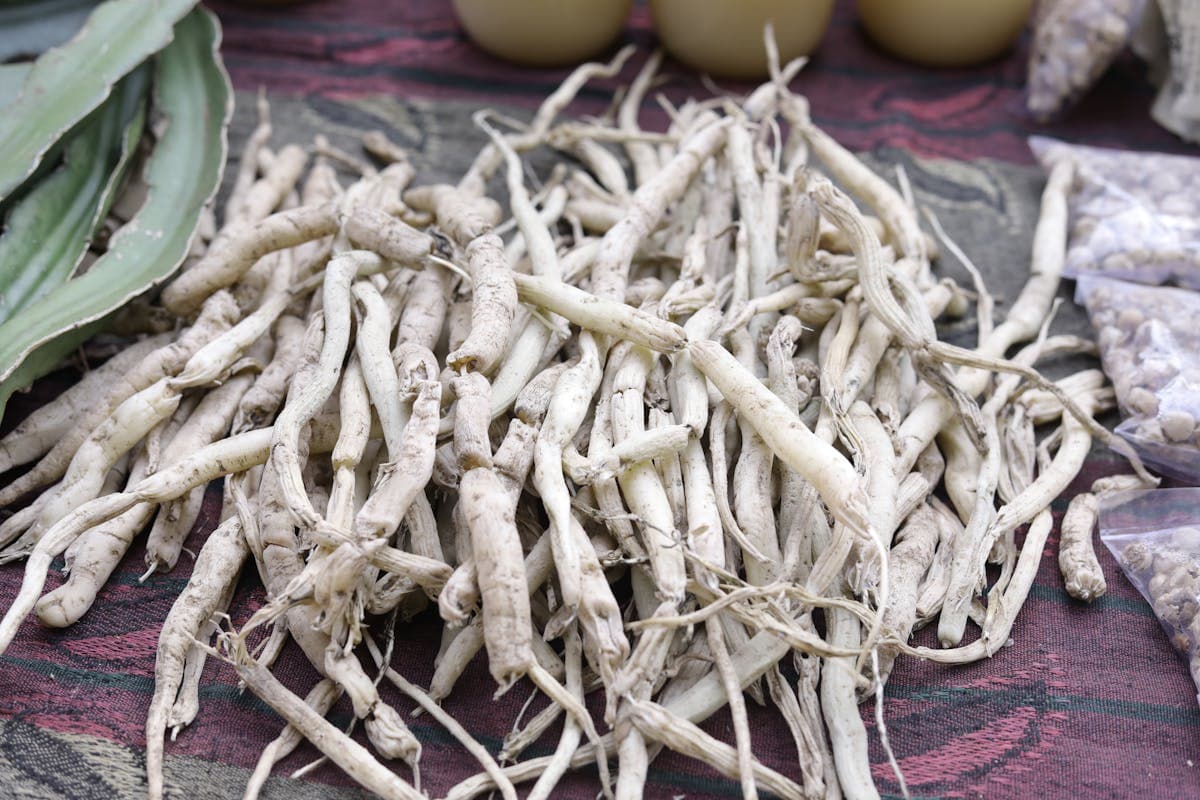
These two supplements get bundled together so often that people assume they do the same thing. They do not. Shilajit is a mineral-organic resin that supports mitochondrial energy and nutrient delivery. Ashwagandha is a herbal root extract that downregulates the stress response. They share a few effects (sleep, libido, general wellbeing) but the mechanisms are different and so are the right use cases.
This guide gives you the honest head-to-head, real study citations, a comparison table, and a stack protocol if you want both.
For the deeper combo article, the shilajit and ashwagandha stack is the parent.
What each one is, briefly
Shilajit is a sticky, tar-like resin that oozes from rocks at 10,000-18,000 ft in mountain ranges including the Himalayas, Altai, and Caucasus. Its active fractions are humic acid, fulvic acid (Ghosal, JEP), dibenzo-alpha-pyrones (DBPs), and a dense mineral profile (60-80% mineral content per Carbonates and Evaporites 2012 sample analysis). It is a geological product, not a plant.
Ashwagandha (Withania somnifera) is the dried root of a small shrub native to India and parts of the Middle East. Its active compounds are withanolides, particularly withaferin A and withanolide A. It is grown, harvested, and extracted, often standardized to a specific withanolide percentage (KSM-66 at 5%, Sensoril at 10%).
Already you can see one is a rock and one is a plant. The mechanisms diverge from there.
Mechanism comparison
| System | Shilajit | Ashwagandha |
|---|---|---|
| Primary target | Mitochondrial ETC, mineral status | HPA axis (cortisol) |
| Secondary target | Iron bioavailability, fulvic chelation | GABA-A receptors (calming) |
| Effect on cortisol | Mild, indirect | Significant, direct (15-30% reduction) |
| Effect on testosterone | Direct (Andrologia 2015) | Indirect, mostly via cortisol |
| Effect on sleep | Neutral to slightly activating | Sleep-promoting |
| Best time to take | Morning | Evening (mostly) |
| Onset | 2-8 weeks | 2-6 weeks |
| Sensation | Subtle baseline shift | Calming, "edge off" |
Shilajit is a "feed the engine" tool. Ashwagandha is a "calm the alarm" tool. They are not redundant.
Evidence base
Both have human RCTs, but the depth differs.
Shilajit human studies of note:
- Andrologia 2015 (Pandit et al, n=96): 250 mg purified shilajit twice daily for 90 days, total testosterone, free testosterone, and DHEAS rose significantly in oligospermic men.
- Andrologia 2010 (n=35): 100 mg processed shilajit twice daily for 90 days, sperm parameters and oxidative stress markers improved.
- Carbonates and Evaporites 2012: detailed mineralogical and organic composition of authentic Himalayan samples.
- Ghosal (Journal of Ethnopharmacology, multiple years): characterization of fulvic acid and DBP fractions.
Ashwagandha human studies of note:
- Chandrasekhar et al 2012 (n=64): KSM-66 600 mg/day for 60 days, perceived stress (PSS), serum cortisol, and DHEA-S all moved favorably. Cortisol dropped roughly 27% from baseline.
- Lopresti et al 2019 (n=60): Shoden 240 mg/day for 60 days, stress, anxiety, sleep, and morning cortisol improved.
- Multiple smaller trials on sleep, anxiety, athletic performance, and thyroid markers.
Honestly, ashwagandha has more and larger trials than shilajit. That does not make it "better"; it makes its claims better-evidenced.
Cost and dosing
| Variable | Shilajit | Ashwagandha |
|---|---|---|
| Daily clinical dose | 250-500 mg purified | 300-600 mg standardized extract |
| Cost per month (resin/quality extract) | $20-40 | $15-30 |
| Format that works | Resin (best), capsules | Capsules (KSM-66 or Sensoril) |
| Standardization | Fulvic % or DBP % | Withanolide % |
| Cycling needed | Optional (some prefer 5-on/2-off) | Optional, no clear evidence required |
Per dollar, ashwagandha is slightly cheaper to dose at clinical levels. Per dollar of "bang per body system," shilajit covers more downstream effects (minerals, iron, energy) but ashwagandha hits stress and sleep harder.
Best-for breakdown
Pick shilajit if:
- Energy is the main complaint, especially low-grade chronic fatigue
- You are male, 30+, and care about testosterone
- Iron status is borderline (low ferritin, menstruating women, vegetarians)
- You want mineral support without a multivitamin
- Your stress is mild and your sleep is fine
Pick ashwagandha if:
- Anxiety or "always wired" is the main complaint
- Sleep onset is poor or sleep is shallow
- You are stuck in a high-cortisol pattern (waking at 3-4 AM, belly fat resistant to diet, irritability)
- You want a calming effect by week 2-4
- You do not want anything stimulating
Pick both if:
- You want morning energy and evening calm
- You are training hard and sleeping poorly
- You are managing both fatigue and stress
How they interact
The good news: no significant negative interactions documented in the literature. They work on different targets. The mineral chelation of shilajit does not measurably affect ashwagandha withanolide absorption, and ashwagandha's HPA effect does not interfere with shilajit's mitochondrial mechanisms.
The practical caution: both have mild thyroid effects (ashwagandha can raise T4; shilajit contains iodine). If you are on thyroid medication, monitor with your doctor before stacking.
Original stack protocol
If you want both, run this for a month before adjusting.
| Time | Compound | Dose | With | Notes |
|---|---|---|---|---|
| 7-8 AM | Shilajit | 300 mg | Warm water, optionally lemon | Empty stomach if tolerated |
| 7-8 AM | Breakfast | - | Iron-containing food helps | - |
| 12-1 PM | (optional) Shilajit | 100 mg | Lunch | Skip on stimulant-heavy days |
| 7-8 PM | Ashwagandha | 300-600 mg KSM-66 or 240 mg Shoden | Dinner | Fat aids withanolide absorption |
| 30 min before bed | (optional) Magnesium glycinate | 200-400 mg | Water | Synergy with ashwagandha for sleep |
Run for 30 days, journal sleep quality and morning energy on a 1-10 scale, then decide whether to keep both or drop one.
Ashwagandha brand and form picks
This is a shilajit site, but a few honest notes for the stack:
For ashwagandha, look for either KSM-66 (Ixoreal Biomed, full-spectrum, milk-based extraction, 5% withanolides) or Sensoril (Natreon, higher withanolide percent, more sedating). Avoid generic "ashwagandha root powder" with no standardization listed.
A few products combining both:
- Be Bodywise+Ashwagandha gummies pair shilajit with ashwagandha in a single product.
- Gummies with Ashwagandha is another combo gummy.
- BeepWell is a shilajit-only option if you prefer to dose ashwagandha separately for control.
For shilajit specifically, Pure Himalayan Organic Resin, Herbs Mill, PakShilajit Purified, and BetterAlt Himalayan are well-vetted. Pure Himalayan Organic Resin alt is another clean resin.
What about cycling
Some users cycle adaptogens (5 days on, 2 off, or 8 weeks on, 2 weeks off). Evidence for required cycling is thin for both compounds, but two practical reasons to take occasional breaks:
You stop noticing the effect (hedonic adaptation). A 1-2 week break can restore subjective response.
You want to retest baseline. Stopping for 2 weeks and noting how you feel is the most honest way to know if the supplement is still doing something.
Continuous use for 6-12 months is fine for most people. After that, a planned break is reasonable.
Side effects: where they differ
Shilajit common side effects: none in most users; rare GI upset, mild headache during the first week (often a hydration issue), insomnia if dosed late in the day. Heavy metal contamination is the real risk and depends on brand quality. Iron overload is the genuine contraindication.
Ashwagandha common side effects: drowsiness (the point, mostly), GI upset, rarely hyperthyroid effects, rarely liver enzyme elevations in case reports (uncommon but documented). Avoid in active hyperthyroidism, autoimmune thyroid disease without medical guidance, and pregnancy.
For shilajit detail, shilajit side effects and the safety guide.
Who should skip one or both
Skip shilajit if: you have hemochromatosis, are pregnant or lactating, are on warfarin or high-dose iron, or cannot verify your source.
Skip ashwagandha if: you are pregnant, have hyperthyroidism, are on thyroid medication without doctor coordination, are on sedatives, have active autoimmune disease without medical input, or have liver disease.
Skip both if: you are pregnant, lactating, or under 18 without pediatric guidance.
Honest comparison summary
In one paragraph: ashwagandha is the better-studied, more reliably calming compound; shilajit is the more energy-supporting, mineral-dense compound. If you can only run one, pick the one that matches your actual problem (cortisol vs energy). If you can run both, take shilajit in the morning and ashwagandha in the evening, give it 30 days, and judge.
Where to go from here
If energy is your priority, shilajit for energy has the full mitochondrial breakdown.
If male hormone is your priority, the testosterone deep-dive and shilajit benefits for men.
If libido is the goal, shilajit for libido.
If you want women-specific framing, shilajit benefits for women.
For the broader picture, the complete benefits guide, what shilajit actually is, and how to take shilajit.
Run the stack for 30 days, journal honestly, and let the protocol prove or disprove itself. That is the only test that matters.
How we research this content
This article was written by Paula Kessler and reviewed against published research and traditional sources by the Clean Shilajit editorial team. Where we reference studies, we link to them so you can read the original.
This content is for education and is not medical advice. It follows our editorial guidelines and is updated as new evidence emerges. Always speak with a qualified healthcare provider before changing your supplement routine.
Ready to Experience Pure Shilajit?
Check out our recommended products and start your wellness journey today.
View Recommended ProductsRelated Articles

Shilajit for Anxiety and Stress: Honest Mechanism Review
What shilajit actually does for anxiety and stress, where the human evidence is thin, and how to stack it with ashwagandha for real acute anxiolysis.
Shilajit and Ashwagandha: A Stacking Protocol with Timing
How to stack shilajit and ashwagandha with morning, evening, and pre-workout timing windows backed by cortisol and testosterone research.

Shilajit and Cortisol: Can It Actually Lower Stress Hormones?
Does shilajit cortisol lowering hold up? See what the research, fulvic acid, and adaptogen pairings suggest about stress hormones, dosing, and safety.