
Shilajit Resin vs Capsules vs Powder: Which Form Actually Wins?

If you want the short answer to the shilajit resin vs powder vs capsules question, here it is: resin is usually the most potent and least processed form and the one most experienced users prefer, capsules are the most convenient and travel-friendly but often the most diluted, and powder sits in the middle as a flexible option that mixes easily but can be harder to verify for purity. No single form is "best" for everyone. The right pick depends on how much you value potency, taste tolerance, convenience, and your budget.
This guide compares all three forms honestly, including where each one quietly cuts corners. By the end you will know which format fits your routine, how to dose each one, and how to avoid the low-quality products that exist in every category.
In short: choose resin for maximum potency and purity verification, capsules for convenience and no taste, and powder for flexible mixing and a middle-ground price, then judge the specific product by its lab testing rather than its format alone.
The three forms at a glance
Before we go deep, here is the quick comparison most people are looking for. Treat these as general tendencies, not guarantees, because a well-made capsule can beat a poorly made resin any day.
| Factor | Resin | Powder | Capsules |
|---|---|---|---|
| Typical potency | Highest | Medium to high | Variable, often lowest |
| Processing | Least | Moderate | Most |
| Convenience | Lowest | Medium | Highest |
| Taste | Strong, bitter | Strong, bitter | None |
| Dosing precision | Eyeball (rice grain) | Spoon, less precise | Exact per capsule |
| Purity verification | Easiest to test | Moderate | Hardest |
| Travel friendly | Poor (sticky) | Fair | Excellent |
| Cost per real dose | Often best value | Mid | Often most expensive |
Each row hides nuance, so let's unpack what actually matters. If you are brand new to the supplement, start with our plain explainer on what shilajit is and the broader complete shilajit benefits guide so the form comparison sits on solid ground.
Shilajit resin: the traditional gold standard
Resin is shilajit in its closest-to-original state. It is the sticky, tar-like substance that results from purifying the raw exudate collected from rock crevices in mountain ranges, then filtering out sand, rock, and debris. If you want to understand how the raw material becomes a finished product, our breakdown of how shilajit is made walks through the steps.
Because resin undergoes the least transformation, it tends to retain the fullest profile of fulvic acid, humic substances, and trace minerals. That is the main reason long-term users gravitate toward it. The dedicated shilajit resin guide covers texture, color, and the "hot knife" test for authenticity in more detail.
Why resin usually wins on potency
A genuine resin is essentially concentrated shilajit with nothing added to bulk it out. There is no filler, no binder, and no flow agent. When you take a portion the size of a grain of rice or a small pea, you are getting a dense dose. For context on the active compounds people care about, the fulvic acid explainer and the mineral profile breakdown are worth a read.
Resin is also the easiest form to verify. You can run simple at-home checks (it should dissolve in warm water, soften in your hand, and turn a golden-brown when stirred) and you can match those observations against a lab certificate. Our guide on how to test shilajit quality shows the practical steps, and reading a lab certification explains the paperwork.
The downsides of resin
Resin is messy. It sticks to spoons, fingers, and jar lids, and it dissolves slowly if your water is too cold. The taste is strong and bitter, which some people never fully get used to. Dosing is also imprecise, since you are eyeballing a small blob rather than counting a fixed milligram amount.
It is also the least travel-friendly format. A jar of resin in a warm bag can soften into a sticky situation. If you move around a lot, that alone may push you toward capsules.
If resin appeals to you, quality matters more than with any other form because there is nothing to hide behind. Lab-verified options like this DBP-verified Himalayan resin or a purified PakShilajit resin are the kind of products where a published certificate of analysis is non-negotiable. A widely used mid-range pick like BetterAlt Himalayan Shilajit resin is a reasonable starting point if you want something popular and accessible.
Shilajit powder: the flexible middle ground
Powder is resin (or extract) that has been dried and ground, sometimes through a process like spray drying or freeze drying. The result is a free-flowing dark powder you can scoop and stir into liquids. Our shilajit powder guide goes deeper on how it is produced and what to look for.
Powder solves two of resin's biggest annoyances. It is far less messy, and it mixes into liquids more readily, which makes it a favorite for people who like to blend shilajit into drinks. If that is you, the recipes in how to mix shilajit into coffee, tea, and smoothies and the broader coffee recipes and protocols will be useful.
Where powder shines
Flexibility is the headline. You can adjust your scoop up or down, dissolve it fast in warm water, and avoid the sticky cleanup that comes with resin. Powder also tends to cost less per gram than premium resin, which makes it attractive if you are price sensitive. Our price guide puts the numbers in perspective across formats.
Powder can be genuinely potent when it is made from concentrated extract rather than diluted with carriers. The catch is that you usually cannot tell by looking. That is why a lab report matters as much here as it does for resin.
Where powder gets tricky
The same processing that makes powder convenient can also lower potency or invite adulteration. Some "powders" are mostly carrier material (like maltodextrin) with a small fraction of actual shilajit. Others may pick up contaminants during drying. The shilajit extract guide explains how standardized extracts differ from plain dried resin, and our piece on shilajit side effects covers what can go wrong with low-quality products.
Dosing is also a bit fuzzier than capsules, since scoop sizes vary and powder can clump. You will want a small scale or a consistent measuring spoon to keep doses steady. The general dosage guide gives sensible starting ranges that apply across forms.
Shilajit capsules: convenience first
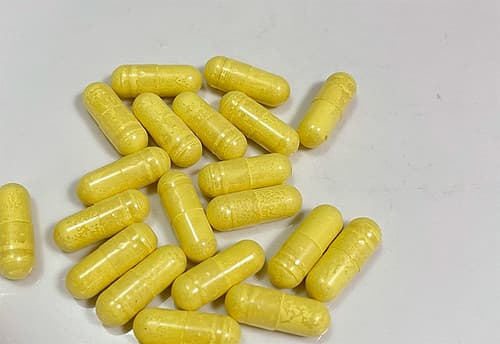
Capsules contain shilajit extract or powder packed into a measured shell, usually gelatin or a vegetarian alternative. Each capsule lists a fixed amount, so you swallow a known dose with no taste and no mess. The shilajit capsules guide and the related tablets guide cover the details of these pressed and encapsulated formats.
For a lot of people, convenience is the deciding factor. Capsules travel well, survive heat without melting, and remove the bitter taste entirely. If you have struggled to stick with resin because of the flavor or the cleanup, capsules can be the difference between a habit you keep and one you quit.
The convenience tradeoff
The price of that convenience is verification. Once shilajit is inside an opaque capsule, you cannot run the simple at-home tests that work on resin. You are trusting the label and the lab report completely. That is fine when the brand is transparent and tests every batch, and risky when it is not.
Capsules are also where dilution is easiest to hide. A capsule might contain only a small amount of actual shilajit alongside fillers, binders, and flow agents. Always check the supplement facts panel and look for a stated extract amount rather than a vague "proprietary blend." For help separating real from fake across formats, see how to choose between gold, silver, and black varieties and our roundup of shilajit myths debunked.
If capsules suit your life, look for transparent, tested products. A straightforward option like these Himalayan pure extract capsules gives you a fixed dose without the mess, while a bioavailability-focused, sugar-free formula such as Root Labs ShilAbsorb is aimed at people who want better absorption from a capsule. If you specifically want cognitive support, the shilajit benefits for brain article explains the reasoning behind brain-targeted formulas.
What about gummies, liquids, and honey sticks?
The three classic forms are not the only options anymore. Gummies, liquid drops, and honey sticks have all carved out a niche, mostly by trading potency for an even easier experience.
Gummies are the most convenient and best tasting, but they are also typically the most diluted and the most likely to contain added sugar. Our shilajit gummies guide covers the tradeoffs honestly. Liquid drops, covered in the shilajit liquid guide, offer flexible dosing and fast mixing but can be harder to standardize. Honey sticks blend shilajit with honey for a portable, palatable option that the honey sticks guide and the article on shilajit and honey both explore.
These formats can be a smart entry point if taste or convenience is your main barrier, but treat them as lighter versions rather than potency leaders. A women-focused honeystick or a flexible liquid drop format can make daily use easier, just keep your expectations calibrated to the lighter dose. There are also combo products that pair shilajit with another adaptogen; the shilajit and ashwagandha article explains when stacking makes sense.
Potency and bioavailability: does the form really change absorption?
This is where marketing gets loud, so let's stay grounded. The most reliable driver of how much benefit you get is the actual amount of genuine, well-processed shilajit you consume, not the shape it arrives in. A potent resin and an equally dosed, well-made extract capsule can deliver similar results.
Shilajit's interest to researchers centers on fulvic acid and a broad mix of minerals and humic compounds. Most of the human research is small and early, so it is fair to say the evidence is promising but not settled. For balanced overviews, the National Institutes of Health maintains useful background through its Office of Dietary Supplements, and the independent analysts at Examine summarize what the studies do and do not show. You can also search the primary literature directly on PubMed and read full-text reviews indexed on PubMed Central.
One nuance worth knowing: fulvic acid is thought to help shuttle minerals across cell membranes, which is part of why people talk about bioavailability with shilajit at all. That mechanism applies regardless of whether the fulvic acid arrives via resin, powder, or capsule. So if a brand claims its capsule is dramatically "more absorbable" than resin, ask for the data rather than taking the claim at face value. Our look at whether shilajit actually works and the honest does shilajit work explainer on results both stress that dose and product quality usually explain outcomes better than format.
Cost: which form gives you the most real shilajit per dollar?
Sticker price is misleading because forms are diluted differently. The fair comparison is cost per milligram of actual shilajit, not cost per jar or per bottle.
Resin often wins this math when you buy a genuine product, because you are paying for concentrated material with little or no filler. Powder is usually next, assuming it is not heavily cut with carrier. Capsules and gummies tend to cost the most per real dose because you are also paying for processing, the capsule or gummy base, and packaging. The price guide and the comparison of buying on Walmart vs Amazon help you sanity-check what you are paying, and our Amazon buying guide covers how to read listings critically.
That said, the cheapest option per milligram is a bad deal if the product is fake or contaminated. Spending a little more on a tested product from a reputable source is almost always the better value. For curated picks across categories, see the best shilajit roundup and the ultimate 2026 buying guide.
Purity and safety: the part that matters most
No matter which form you choose, the single most important factor is contamination risk. Shilajit is a natural mineral-rich substance, and poorly sourced or under-processed products can carry heavy metals such as lead, arsenic, or mercury. This is not a fringe concern. Regulators have flagged heavy metals in some imported supplements, and the FDA provides guidance on metals in food and supplements that is worth understanding before you buy.
Resin is the easiest form to verify with at-home tests and a matching lab report, which is one reason purists prefer it. Capsules are the hardest to verify because you cannot see or test the contents directly. Whatever you pick, insist on a recent third-party certificate of analysis. Our guides on sourcing standards and lab certification explain exactly what to demand.
Who should be cautious or avoid shilajit
Shilajit is not right for everyone. Pregnant and breastfeeding women should avoid it, since safety has not been established and raw or unpurified products carry contamination risk; the shilajit and pregnancy safety article covers this in detail. People with hemochromatosis or other iron-overload conditions should be careful because shilajit can contain iron.
If you take medication (especially blood pressure drugs, diabetes medication, or anything affecting iron levels) or you have a chronic condition involving your kidneys or heart, talk to a clinician first. Trusted patient resources from the Cleveland Clinic and Healthline summarize the cautions in plain language. Our overview of whether shilajit is safe and the detailed side effects guide round out the picture. Start low, watch how you feel, and stop if anything seems off.
How to dose each form
Dosing differs by form, so here is a practical starting point. Always follow the specific product label, since concentration varies, and treat these as conservative defaults rather than rules.
- Resin: Start with a portion about the size of a grain of rice (roughly 200 to 300 mg) dissolved in warm water or another liquid, once daily. You can work up gradually if it agrees with you.
- Powder: Begin with a small, level scoop matching the label's stated serving, stirred into warm liquid. Use a scale for consistency if you can.
- Capsules: Take the labeled number of capsules, usually one, with water. This is the most foolproof form for exact dosing.
For timing questions, our guide on the best time to take shilajit, morning vs night and the general how to take shilajit walkthrough help you fit it into a routine. Many people also benefit from a cycling protocol with planned breaks, regardless of form. If you want to keep your product fresh, the storage guide and the article on whether shilajit expires are worth bookmarking, since resin and powder behave differently over time.
So which form actually wins?
There is no universal winner, but there is a winner for you. Here is the honest decision framework.
Choose resin if you want maximum potency, the fewest additives, and the ability to verify quality yourself, and you do not mind the taste, mess, and slightly fiddly dosing. This is the connoisseur's pick and often the best value per real dose. A reliable, organic-leaning resin like this Himalayan organic resin extract is a solid place to start.
Choose powder if you want flexibility, easy mixing into drinks, and a middle-ground price, and you are comfortable relying on a lab report for purity. It is the most versatile everyday format for people who like to blend their supplements.
Choose capsules if convenience, exact dosing, no taste, and travel-friendliness matter most, and you are willing to pay a bit more and lean entirely on the brand's testing. For many busy people, the capsule they will actually take beats the resin they keep forgetting.
Whichever you pick, let lab testing, sourcing transparency, and honest labeling guide the final decision more than the format itself. The right form taken consistently always beats the "perfect" form you abandon. To go deeper on choosing a specific brand, see our best shilajit brand comparison and the full supplement guide.
Frequently Asked Questions
Q: Is shilajit resin better than capsules?
Resin is usually more potent and easier to verify for purity because it has the fewest additives and you can test it at home. Capsules are not necessarily worse, though. A well-made, lab-tested capsule can match a good resin while being far more convenient and travel-friendly. The better choice depends on whether you prioritize maximum potency or ease of use.
Q: Which shilajit form is the most potent?
Genuine resin is typically the most potent form because it is the least processed and contains little or no filler. Powder can be nearly as strong if it is made from concentrated extract rather than diluted with a carrier. Capsules and gummies tend to be the most diluted, though a transparent brand with a high stated extract amount can still deliver a strong dose.
Q: Does the form of shilajit affect absorption?
The amount of genuine, well-processed shilajit you take matters more than the format. Fulvic acid is thought to aid mineral absorption regardless of whether it arrives as resin, powder, or capsule. Be skeptical of brands claiming one form is dramatically more "bioavailable" without data to back it up, and focus on dose and product quality instead.
Q: Is shilajit powder or resin cheaper?
Per real dose, genuine resin often offers the best value because you are paying for concentrated material with minimal filler. Powder is usually slightly more expensive per milligram, and capsules and gummies tend to cost the most because of added processing and packaging. The cheapest option is a bad deal, though, if the product is fake or contaminated.
Q: Which shilajit form is best for beginners?
Capsules are the easiest starting point for beginners because they remove the taste, the mess, and the guesswork around dosing. If you are willing to handle the bitter flavor, a small amount of tested resin gives you more potency and easier purity verification. Either way, start with a low dose and choose a product with a published third-party lab report.
How we research this content
This article was written by Paula Kessler and reviewed against published research and traditional sources by the Clean Shilajit editorial team. Where we reference studies, we link to them so you can read the original.
This content is for education and is not medical advice. It follows our editorial guidelines and is updated as new evidence emerges. Always speak with a qualified healthcare provider before changing your supplement routine.
Ready to Experience Pure Shilajit?
Check out our recommended products and start your wellness journey today.
View Recommended ProductsRelated Articles
Shilajit Pills vs Resin: Which Form Is Actually Better?
A clear shilajit pills vs resin comparison covering potency, dosing, taste, price, and absorption, so you can pick the form that fits your routine and budget.
Shilajit 6:1 Extract Explained: What the Ratio Really Means
Confused about shilajit 6:1 extract and how much to take? Here is what the ratio means, typical doses, and how it compares to raw resin and capsules.
Best Form of Shilajit to Take: Bioavailability Compared
The best form of shilajit to take is purified, lab-tested resin for potency, with capsules and honeysticks winning on convenience. Compare bioavailability here.